
Home > South Dakota
Final Expense Insurance in South Dakota — Coverage for Great Plains Families
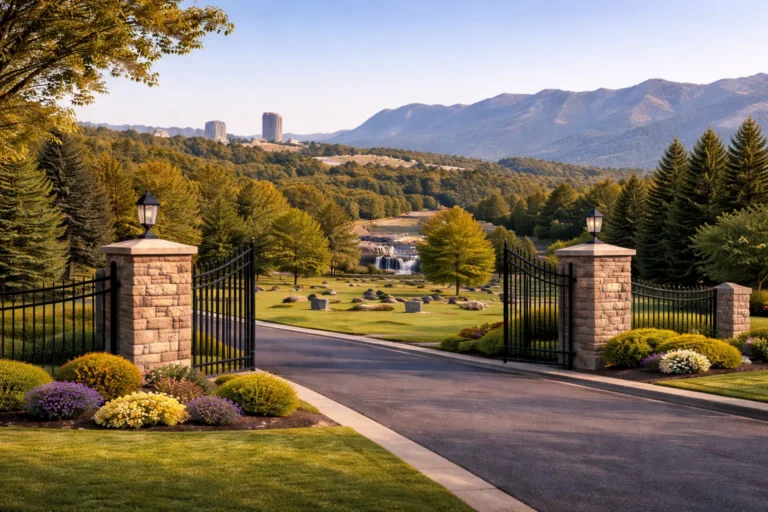
South Dakota stretches from the Black Hills and Badlands in the west to the farm country of the eastern prairie, with the Missouri River splitting the state into two distinct halves known locally as West River and East River. Final expense insurance helps South Dakota seniors in Sioux Falls, Rapid City, Aberdeen, and the ranching communities across Meade and Pennington counties cover funeral and burial costs without leaving the bill to their families. The state’s aging rural population, cold-weather burial logistics, and strong tradition of small-town funeral homes shape how families plan for end-of-life expenses here.
Funeral and Cremation Costs in South Dakota
South Dakota funeral costs sit slightly below the national median, but the gap between the eastern population centers and the rural West River counties is wide enough that families should plan for their specific region. Cremation adoption is steadily climbing in Sioux Falls and Rapid City, while traditional burial remains the norm in smaller farming and ranching communities. The figures below give a realistic statewide picture before families sit down with a local funeral home to review an itemized General Price List.
Statewide averages
| Service type | South Dakota average | National median (NFDA) |
|---|---|---|
| Traditional full-service burial (with vault) | $8,500–$8,800 | ~$9,995 |
| Traditional funeral (no vault) | ~$8,596 | ~$8,300 |
| Full-service cremation with memorial | $3,500–$7,000 | ~$6,280 |
| Direct cremation | $1,000–$2,900 | ~$2,185 |
| Immediate burial (no service) | $3,100–$4,500 | ~$4,000 |
South Dakota’s traditional burial average of roughly $8,500 puts the state about 5–15% below the national median, while direct cremation pricing in the state is close to the national average. These figures exclude cemetery plot, opening and closing fees, headstone, and vault upgrades, which commonly add $3,000–$6,000 to a burial.
Regional cost variation within the state
South Dakota splits cleanly into two pricing regions divided by the Missouri River, with meaningful variation inside each:
- East River metros (Sioux Falls, Brookings, Watertown, Aberdeen, Yankton). Sioux Falls carries the highest funeral and cremation prices in the state due to higher operational costs and a denser provider market. Direct cremation in Sioux Falls typically runs $1,500–$3,000, and full-service cremation can reach $7,500. Traditional burial in the Sioux Falls metro commonly lands near $7,700.
- East River rural counties (Beadle, Brown, Codington, Davison, Hutchinson). Small-town funeral homes in Huron, Mitchell, and Aberdeen generally price 10–20% below Sioux Falls. Direct cremation can start near $1,000 in these markets, and traditional burial often comes in around $6,400–$7,000.
- West River metros (Rapid City, Spearfish, Box Elder). Rapid City prices mirror Sioux Falls on the high end, with cremation-with-services averaging $6,500–$7,500. Winter burial logistics in the Black Hills foothills can add to overall costs when ground conditions require delayed interment.
- West River rural and reservation counties (Meade, Butte, Harding, Perkins, and the Pine Ridge, Rosebud, Cheyenne River, and Standing Rock reservation counties). These counties have the thinnest provider density in the state. Families often travel to Rapid City, Pierre, or Mobridge for funeral services, and transportation charges add meaningfully to the final bill.
What drives cost in South Dakota
A handful of state-specific factors shape final pricing. The long distances between funeral homes in West River and the reservation counties push transportation and transfer fees higher than what East River families typically see. Cold-weather burial logistics matter statewide — winter frost can delay interment and require temporary storage or vault charges. Cemetery plot costs vary sharply, from a few hundred dollars in rural township cemeteries to several thousand in perpetual-care cemeteries in Sioux Falls and Rapid City. South Dakota also provides a state burial allowance of up to $100 for qualifying honorably discharged veterans and their spouses through the county veteran service officer, which stacks with federal VA burial benefits. For most families, final expense insurance in the $10,000–$15,000 range is enough to cover a traditional burial in South Dakota with room left over for cemetery and headstone costs; a $5,000–$8,000 policy typically covers direct cremation or a simple memorial.
Sources: National Funeral Directors Association, Funeralocity, US Funerals Online, World Population Review, South Dakota Division of Consumer Protection, and South Dakota Department of Veterans Affairs.
Final Expense Insurance Regulations in South Dakota
South Dakota regulates final expense policies under Title 58 of the South Dakota Codified Laws, with supporting administrative rules in ARSD 20:06. The protections below apply to every burial insurance and funeral life insurance policy sold to South Dakota residents, regardless of which carrier issues the policy. Seniors comparing policies should know these rights before signing an application.
The regulator
The South Dakota Division of Insurance, part of the Department of Labor and Regulation, oversees every carrier and agent selling life insurance in the state. The Division licenses agents, reviews policy forms, investigates consumer complaints, and monitors the financial solvency of the roughly 420 life and annuity carriers authorized to do business in South Dakota. The office is located at 124 South Euclid Avenue, 2nd Floor, Pierre, SD 57501, and can be reached at 605-773-3563.
Free look period
South Dakota law guarantees a minimum 10-day free look period on every life insurance policy delivered in the state, under SDCL 58-15-8.1. A policyholder who cancels during this window receives a full refund of any premium paid, no questions asked. Policies sold by mail order must provide an extended 30-day review period. Many final expense carriers voluntarily offer 20 or 30 days as a standard feature, so the certificate page should be checked for the exact window that applies.
Key state-specific rules for final expense buyers
- Grace period. South Dakota requires roughly a 30-day grace period on premium payments after the first payment, which prevents accidental lapse if a payment is delayed by weather, mail, or a banking hiccup — a meaningful protection in a state where blizzards can interrupt rural mail routes for days.
- Two-year contestability period. Like most states, South Dakota allows insurers up to two years from the policy issue date to investigate the application if a claim is filed. Material misrepresentations on the application — tobacco use, health history, prescription drug use — can give the carrier grounds to rescind coverage or reduce the death benefit during this window. Answering every health question truthfully is the single most important thing a final expense applicant can do.
- Claims payment timeline. Once a beneficiary files a complete claim, the insurer has 60 days (two months) to pay the death benefit. Claims not paid within this window begin accruing interest, and the carrier can face penalties from the Division of Insurance.
- Assignment to funeral homes. Under SDCL 58-33-23, an insurer may not pay policy benefits directly to a funeral director or funeral home unless the beneficiary has signed a written assignment authorizing it. This protects seniors and their families from funeral-home pressure to redirect benefits before the family has had a chance to make its own arrangements.
- Genetic testing and medical privacy. South Dakota prohibits life insurers from requiring genetic testing or using existing genetic test results to determine eligibility, and carriers may not share an applicant’s medical information with outside entities without signed consent.
Guaranty association protection
If a licensed South Dakota carrier becomes insolvent, the South Dakota Life and Health Insurance Guaranty Association backs policies in force, covering up to $300,000 in death benefits and $100,000 in cash surrender value per individual. This backstop applies only to carriers licensed in South Dakota — another reason to verify a company’s license through the Division of Insurance before signing an application.
Graded death benefits and replacement
South Dakota does not impose unusual restrictions on graded death benefit policies, which are common in the final expense market for applicants with significant health conditions. A graded policy typically pays a reduced benefit (often a return of premiums plus interest) in the first two years and the full face amount thereafter. If a policy is being replaced, South Dakota follows the NAIC model replacement regulation — the applicant must be given written notice comparing the existing policy to the new one, and the replacing insurer must notify the existing carrier. A new two-year contestability period begins on the replacement policy, which is usually the single strongest reason not to replace an existing final expense policy unless the numbers clearly justify it.
Sources: South Dakota Division of Insurance, South Dakota Codified Laws Title 58, South Dakota Life and Health Insurance Guaranty Association, and the National Association of Insurance Commissioners.
Funeral and Burial Laws in South Dakota
South Dakota law sets clear rules for death certificates, burial permits, cremation, and home burial. Most of these statutes sit in Title 34 of the South Dakota Codified Laws, with funeral practitioner regulations administered separately. Families planning a funeral — or preplanning their own arrangements — should understand the rules below, because they shape how quickly disposition can occur and what a funeral home is legally required to do.
The regulator
The South Dakota Board of Funeral Service, housed under the South Dakota Department of Health, licenses every funeral director, funeral home, and crematory operating in the state. The Board investigates consumer complaints, enforces funeral service statutes, administers the apprenticeship program for trainees, and inspects funeral establishments. Consumers can verify any funeral home or director’s license directly through the Board before signing a service contract.
Death certificate filing
A death certificate must be filed with the South Dakota Department of Health within five days of the death, under SDCL 34-25-25. The funeral home, mortuary, or other person in charge of the remains typically prepares and files the certificate. When a coroner’s case is involved, the coroner signs and files the medical certificate within five days unless an autopsy or investigation delays it. Families should request at least 10 certified copies at the time of filing — copies are used to close bank accounts, transfer titles, file insurance claims, and claim Social Security and VA benefits.
Burial permit
A burial or disposition permit is required before any body can be buried, cremated, or otherwise finally disposed of, under SDCL 34-25-24. The permit is issued by the local registrar or health department and must be in place before the funeral home can proceed with burial or cremation. This requirement applies equally to traditional cemetery burial, home burial, and cremation.
Embalming rules
South Dakota does not require embalming in most cases. Under SD Admin. R. 20:45:02:07, if final disposition (burial or cremation) does not occur within 24 hours, the body must be either embalmed or refrigerated. Refrigeration serves the same legal purpose as embalming and is the lower-cost option. No state law requires embalming for a simple cremation or a direct burial, and families are within their rights to decline it.
Cremation authorization and waiting period
South Dakota requires a signed cremation authorization form from the legal next of kin or a pre-need authorization signed by the deceased before cremation can begin. The state also requires a 24-hour waiting period from the time of death before cremation may start, and crematories must be licensed separately under SDCL Chapter 34-26A. The authorization form serves as a legal warranty of identity and authority, and the signer becomes legally accountable for the instructions given. Commingling of remains is prohibited except in specific authorized circumstances. Alkaline hydrolysis (water cremation) is not currently authorized under South Dakota law.
Home burial and private land burial
Home burial is legal in South Dakota, which reflects the state’s rural tradition. There is no statute prohibiting burial on private property, but the family must obtain a burial permit from the local registrar before interment, and the burial site must be mapped and recorded with the local office of the registrar of vital records under SDCL 34-27-8. Local zoning rules can apply on top of state law, so families planning a home burial should contact the county or township clerk before proceeding. Burial at sea is available to South Dakotans who travel to the coast; the EPA regulates it federally and requires burial at least three nautical miles from shore.
Casket rules
No South Dakota law requires a casket for burial or cremation. Federal Trade Commission rules require funeral homes to accept caskets purchased from outside sources (including online retailers) without additional fees, and crematories must offer alternative containers. Individual cemeteries may still require a grave liner or vault to prevent the grave from settling, but that is a cemetery rule, not a state requirement.
Green burial and human composting
Green burial — burial without embalming chemicals, in a biodegradable container, without a concrete vault — is legal in South Dakota and is offered by a small but growing number of cemeteries. Two cemeteries in the Sioux Falls area currently accommodate green burials as “hybrid” sections within otherwise traditional cemeteries. Human composting (terramation) is not yet authorized under South Dakota law, though South Dakota families can arrange it by transporting remains to a licensed facility in a state where it is legal.
Indigent burial and veteran benefits
Under SDCL 28-17-1, each county is required to arrange burial or cremation for any resident who dies without means to pay and whose family cannot cover the cost. Families in financial hardship should contact County Social Services before committing to funeral arrangements. Honorably discharged veterans qualify for federal VA burial benefits and, in most cases, a state burial allowance of up to $100 through the county or tribal Veteran Service Officer when the estate lacks funds. Native American families on reservation land may also qualify for Bureau of Indian Affairs burial assistance.
Sources: South Dakota Board of Funeral Service, South Dakota Codified Laws Title 34 (Chapters 25, 26A, and 27), South Dakota Administrative Rules 20:45, South Dakota Department of Health Office of Vital Records, South Dakota Division of Consumer Protection, and South Dakota Department of Veterans Affairs.
Regions and Major Metros in South Dakota
South Dakota’s geography is famously split by the Missouri River into “East River” and “West River” — two halves with distinct settlement histories, economies, climates, and even time zones. Within those halves, smaller named regions shape how South Dakotans identify where they are from. About half the state now lives in the Sioux Falls or Rapid City metros, while the rest remains spread across farm, ranch, and reservation counties. The breakdown below orients readers to the regional structure so they can find their county in the hub section that follows.
Named regions of South Dakota
- East River. Everything east of the Missouri River. Glaciated farmland, corn and soybean country, Scandinavian and German settlement heritage, Central Time. Contains roughly two-thirds of the state’s population.
- West River. Everything west of the Missouri. Ranching country, Great Plains landscape, more ethnically mixed settlement heritage, Mountain Time. Contains most of the state’s land area but well under half the population.
- The Black Hills. A distinct region within West River. A forested, low mountain range in the state’s southwest corner that holds Mount Rushmore, Custer State Park, Deadwood, and the Spearfish–Rapid City corridor. Home to a growing retiree and military-adjacent population.
- The Coteau des Prairies. The higher, lake-dotted plateau in northeastern South Dakota, running through Brookings, Watertown, and the Sisseton area.
- The James River Valley. The north–south agricultural corridor through Aberdeen, Huron, Mitchell, and Yankton.
- The Missouri River corridor. The Pierre–Fort Pierre–Chamberlain–Mobridge band of counties along the river itself, including the four “South Dakota Great Lakes” reservoirs.
- Reservation communities. Nine federally recognized tribal nations with a major population and cultural presence, concentrated on the Pine Ridge, Rosebud, Cheyenne River, Standing Rock, and Lower Brule reservations in West River, plus Yankton, Crow Creek, Flandreau, and Sisseton-Wahpeton in East River.
Top metros by population
South Dakota has three federally designated Metropolitan Statistical Areas plus nine Micropolitan Statistical Areas. The list below covers the largest urban centers that most final expense research will touch.
| Metro or urban center | Approximate 2024 population | Region |
|---|---|---|
| Sioux Falls metro (Minnehaha, Lincoln, McCook, Turner counties + Rock Co., MN) | ~308,000 | East River |
| Rapid City metro (Pennington, Meade counties) | ~156,000 | West River / Black Hills |
| Aberdeen micropolitan area (Brown, Edmunds counties) | ~44,000 | East River / James River Valley |
| Brookings micropolitan area (Brookings County) | ~37,000 | East River / Coteau des Prairies |
| Watertown micropolitan area (Codington, Hamlin counties) | ~34,000 | East River / Coteau des Prairies |
| Yankton micropolitan area (Yankton County) | ~23,000 | East River / Missouri corridor |
| Mitchell micropolitan area (Davison, Hanson counties) | ~25,000 | East River / James River Valley |
| Spearfish micropolitan area (Lawrence County) | ~26,000 | West River / Black Hills |
| Pierre micropolitan area (Hughes, Stanley counties) | ~20,000 | Missouri corridor (state capital) |
| Huron micropolitan area (Beadle County) | ~18,000 | East River / James River Valley |
The Sioux Falls and Rapid City metros together now hold roughly 50% of the state’s population — a major shift from a generation ago, when the balance tilted much more heavily to rural counties.
Counties grouped by region
South Dakota has 66 counties (technically 66 organized counties plus Oglala Lakota County and a few non-functioning historic counties). The grouping below reflects how residents and state agencies commonly sort them. Some counties sit at regional boundaries and reasonable people group them differently; this table reflects the most widely used definitions.
| Region | Counties |
|---|---|
| Sioux Falls metro (East River, southeast) | Minnehaha, Lincoln, McCook, Turner |
| Southeast East River | Clay, Union, Yankton, Bon Homme, Hutchinson, Lake, Moody |
| Coteau des Prairies / Northeast East River | Brookings, Codington, Hamlin, Deuel, Grant, Roberts, Day, Marshall, Clark, Kingsbury |
| James River Valley / North-central East River | Brown, Edmunds, Spink, Beadle, Sanborn, Davison, Hanson, Miner, Hand, Faulk, McPherson |
| South-central East River | Aurora, Douglas, Charles Mix, Gregory, Tripp, Jerauld, Brule, Buffalo |
| Missouri River corridor | Hughes, Stanley, Sully, Potter, Walworth, Campbell, Lyman |
| Black Hills / West River southwest | Pennington, Meade, Lawrence, Custer, Fall River |
| Northwest West River | Butte, Harding, Perkins, Corson, Dewey, Ziebach |
| South-central West River / Reservation counties | Shannon/Oglala Lakota, Bennett, Jackson, Mellette, Todd, Haakon, Jones |
State-level demographic patterns relevant to final expense insurance
A handful of statewide patterns shape how South Dakota families approach burial and funeral life insurance. The state’s senior population — residents age 65 and older — makes up roughly 18% of the total population, slightly above the national average, and is heavily concentrated in rural East River farming counties and small towns. The Black Hills region around Rapid City and Spearfish is a growing retirement destination, drawing in-migration from Colorado, Wyoming, and Minnesota. South Dakota also has a meaningful military retiree population anchored by Ellsworth Air Force Base in Box Elder (Meade County), along with the nine tribal nations where burial tradition, federal benefits, and family financial realities interact in ways that a generic final expense conversation can miss. Finally, rural distance itself is a demographic fact in West River — several counties have fewer than 2,500 residents spread across thousands of square miles, and the nearest funeral home can be two counties away.
Sources: U.S. Census Bureau (2024 Population Estimates and QuickFacts), Office of Management and Budget (2023 statistical area delineations), South Dakota News Watch, Travel South Dakota, and the South Dakota Department of Tourism.
Counties We Serve in South Dakota
Palmetto Mutual covers families statewide, from the fastest-growing suburbs of Sioux Falls to the smallest ranching communities west of the Missouri River. The directory below lists every county in South Dakota so you can navigate to the page covering your area for local funeral cost data, cemetery information, and agent contacts. South Dakota has 66 counties, confirmed by the U.S. Census Bureau and the South Dakota Association of County Officials.
- Aurora County
- Beadle County
- Bennett County
- Bon Homme County
- Brookings County
- Brown County
- Brule County
- Buffalo County
- Butte County
- Campbell County
- Charles Mix County
- Clark County
- Clay County
- Codington County
- Corson County
- Custer County
- Davison County
- Day County
- Deuel County
- Dewey County
- Douglas County
- Edmunds County
- Fall River County
- Faulk County
- Grant County
- Gregory County
- Haakon County
- Hamlin County
- Hand County
- Hanson County
- Harding County
- Hughes County
- Hutchinson County
- Hyde County
- Jackson County
- Jerauld County
- Jones County
- Kingsbury County
- Lake County
- Lawrence County
- Lincoln County
- Lyman County
- Marshall County
- McCook County
- McPherson County
- Meade County
- Mellette County
- Miner County
- Minnehaha County
- Moody County
- Oglala Lakota County
- Pennington County
- Perkins County
- Potter County
- Roberts County
- Sanborn County
- Spink County
- Stanley County
- Sully County
- Todd County
- Tripp County
- Turner County
- Union County
- Walworth County
- Yankton County
- Ziebach County
Frequently Asked Questions

About the Author
Dvir Mosche is an award-winning independent insurance agent and the founder of Palmetto Mutual, a trusted insurance brokerage specializing in Final Expense Life Insurance. Since entering the industry in 2017, he has been recognized multiple times as a top agent for his dedication to educating and assisting seniors in finding the proper coverage. His mission is to simplify the process, provide honest and personalized guidance, and ensure that every client gets coverage they can depend on for life.


