
Home > Colorado
Final Expense Insurance in Colorado — Coverage for Every County from the Plains to the Peaks
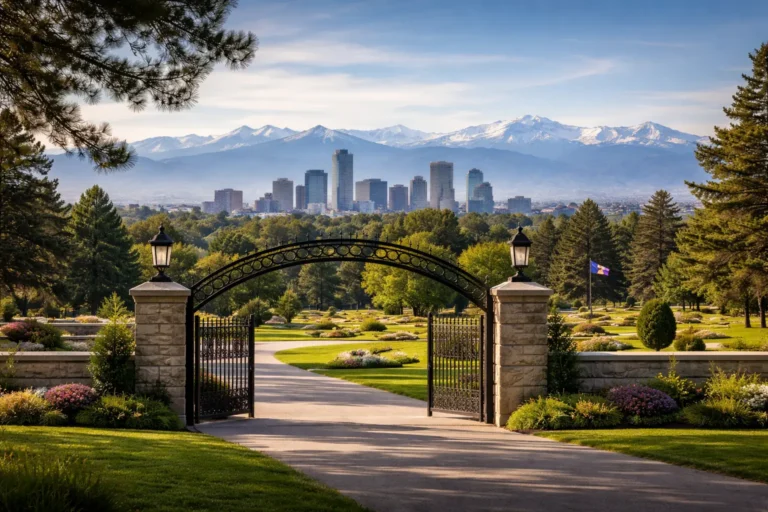
Colorado stretches from the Eastern Plains through the Front Range urban corridor and into the Western Slope, and the state’s final expense insurance needs vary just as widely. Denver, Colorado Springs, and Boulder anchor a Front Range population that holds the majority of the state’s seniors, while mountain resort counties and rural plains counties face their own cost and access realities. Palmetto Mutual helps Colorado seniors compare burial insurance options across all 64 counties, whether you’re in the Denver metro, the San Luis Valley, or a mountain town on the Western Slope.
Funeral and Cremation Costs in Colorado
Colorado funeral costs generally track close to the national median, but the state’s geography creates meaningful regional price variation that seniors should understand before choosing a coverage amount. Cremation is by far the most common choice here — just over 60% of Coloradans are cremated US Funerals Online, and more recent data puts the state above 70%. The figures below give a realistic starting point for Colorado burial insurance planning.
Statewide averages
| Service type | Typical Colorado cost |
|---|---|
| Traditional full-service burial (with casket, vault, viewing) | $7,000–$9,995 |
| Funeral with viewing and cremation | $5,700–$7,000 |
| Direct cremation | $950–$2,000 |
| Immediate (direct) burial | $3,500–$5,500 |
| Cemetery plot | $1,000–$4,000 |
| Grave marker or headstone | $1,000–$3,000 |
A traditional Colorado funeral with burial runs about $7,000 on average, according to Funeralocity’s 2026 state data, while a full-service cremation funeral averages around $5,732. Direct cremation remains the most affordable option, starting near $995 in the Denver metro.
Regional cost variation
Geography matters more in Colorado than in most states. The Front Range has the most provider competition and therefore the lowest direct cremation prices, while mountain and Western Slope counties carry transportation and facility premiums that push costs up. Here’s how prices shift across the state’s main regions.
| Region | Direct cremation range | Notes |
|---|---|---|
| Front Range (Denver, Colorado Springs, Fort Collins, Boulder) | $950–$1,600 | Highest provider competition; lowest entry-level prices |
| Mountain resort counties (Vail, Breckenridge, Aspen, Steamboat Springs) | $1,200–$1,900 | Transportation and facility costs raise prices |
| Western Slope (Grand Junction, Montrose, Durango) | $1,100–$1,700 | Mid-range; fewer providers than Front Range |
| Eastern Plains and San Luis Valley | $1,000–$1,800 | Rural mileage fees common; winter road conditions add cost |
Full-service traditional burial follows the same pattern. Denver and Boulder typically sit at the higher end of the range due to cemetery plot scarcity and higher operating costs, while Pueblo and smaller Front Range cities often come in lower. Mountain counties frequently carry a premium on transportation and refrigeration, especially in winter when road access complicates logistics.
How Colorado compares nationally
Colorado’s funeral pricing sits close to the national median. The NFDA reports a national median cost of $8,300 for a funeral with casket and burial, and $6,280 for a funeral with cremation National Funeral Directors Association (both figures exclude cemetery plot and marker). Colorado’s traditional burial average of roughly $7,000–$7,848 runs slightly below the national median, while cremation costs align closely with national figures. Families in Denver and Boulder may pay modestly above the state average; families on the Eastern Plains and in smaller Western Slope towns often pay less.
Colorado-specific factors that drive cost
Several factors unique to Colorado influence what families actually pay:
- Altitude and geography. Mountain counties face higher transportation costs, longer removal distances, and winter road surcharges. Providers in resort towns also carry higher overhead than Front Range competitors.
- Crestone End of Life Project. Colorado is home to the only outdoor funeral pyre in the United States US Funerals Online, located in the San Luis Valley, offering an alternative that falls outside standard pricing structures.
- Unique regulatory environment. Colorado is the only state that does not license funeral homes or crematories, which creates unusually wide price variation between providers offering identical services. Consumers can see direct cremation quoted at $995 by one provider and $2,900 by another in the same metro.
- Cemetery plot scarcity in the Denver metro. Limited urban cemetery space pushes Front Range plot costs toward the high end of the $1,000–$4,000 range. Rural counties on the Eastern Plains typically offer substantially lower plot costs.
- Cremation-heavy market. Colorado’s cremation rate well above the national average has created strong provider competition at the direct cremation end of the market, particularly along the Front Range.
For most Colorado seniors planning final expense insurance coverage, a policy in the $10,000–$15,000 range covers a full-service cremation funeral with room left for outstanding medical bills or estate costs. Families planning a traditional burial, especially in the Denver or Boulder metros, typically need $12,000–$20,000 in coverage to match the combined cost of funeral services, a cemetery plot, and a grave marker.
Final Expense Insurance Regulations in Colorado
Every state regulates insurance at the state level, and Colorado’s consumer protections for life insurance policies — including final expense and burial insurance — are among the more detailed in the country. Understanding who oversees these policies and what rights you have as a Colorado policyholder can protect you from high-pressure sales tactics and help you make a confident decision.
Who regulates life insurance in Colorado
The Colorado Division of Insurance (DOI), housed under the Department of Regulatory Agencies (DORA), oversees all life insurance sold in the state. The Division reviews policy forms, licenses insurance agents, investigates consumer complaints, and regulates the insurance industry in Colorado, including health, auto, homeowners, life and title insurance, as well as pre-need funeral contracts DORA. That pre-need funeral contract oversight is notable — Colorado regulators monitor both the insurance side and the prepaid funeral side of end-of-life financial products, which gives consumers a single point of contact for complaints involving either.
Colorado life insurance law lives in Title 10, Article 7 of the Colorado Revised Statutes (C.R.S. § 10-7-101 through 10-7-803) Lifeinsureguide, with additional regulations published in the Code of Colorado Regulations at 3 CCR 702-4.
Free look period
Colorado gives you a 15-day free look period on any new life insurance policy, codified in CRS 10-7-302. During this window, you can return the policy for any reason and receive a full refund of premiums paid. For final expense buyers, this is the single most important consumer protection in the state — if the coverage doesn’t match what the agent described, or you find a better rate elsewhere, you have 15 days from policy delivery to walk away with no penalty.
Always check the front page of your policy for the exact free look language, since the window starts when the policy is delivered, not when you signed the application.
Replacement rules
Colorado has one of the stronger replacement disclosure rules in the country, codified in Regulation 4-1-4 (3 CCR 702-4). If an agent tries to get you to cancel an existing life insurance policy and replace it with a new one, state law requires specific disclosures to protect you from “churning” — the practice of switching seniors between policies primarily to generate new commissions.
Before signing any replacement paperwork, you should receive:
- A signed notice from the agent stating that a replacement is occurring
- A comparison showing how the existing policy and the new policy differ
- Time to contact your current insurer before finalizing the switch
If you’re a Colorado senior considering replacing an existing burial insurance or whole life policy, make sure these disclosures are provided in writing. Missing replacement paperwork is a red flag worth reporting to the Division of Insurance.
Grace period and claim payment
Colorado requires a minimum 30-day grace period on life insurance premium payments. If you miss a payment, your policy stays in force for at least 30 days, and coverage continues if you die during that window (with unpaid premium deducted from the death benefit).
Insurers must pay death benefit claims within two months of receiving proof of death. If a claim takes longer than 30 days, Colorado law requires the insurer to pay interest on the benefit dating back to the date of death.
Contestability and suicide clauses
Colorado follows the standard two-year contestability period. During the first two years of a policy, the insurer can investigate and potentially deny a claim based on material misrepresentation on the application. After two years, the insurer generally cannot rescind coverage based on application errors — only fraud or nonpayment of premium can void a policy after that point.
The same two-year window applies to suicide clauses. This is relevant to final expense insurance because many policies for seniors with health issues are sold as “graded” or “modified” policies, which have their own waiting periods layered on top of these baseline protections.
Graded death benefit policies
Final expense insurance is commonly sold in two forms in Colorado: immediate (level) benefit policies for healthier applicants, and graded benefit policies for applicants with more significant health conditions. Graded policies typically pay only a return of premiums plus interest if death occurs in the first two years, then pay the full death benefit after that. Colorado does not ban graded policies, but the Division of Insurance requires clear disclosure of the graded structure at the point of sale.
If an agent is quoting you a final expense policy and you have conditions like diabetes, heart disease, COPD, or recent cancer treatment, ask directly whether the policy is level-benefit or graded-benefit, and get the waiting period in writing.
Guaranty association protection
The Colorado Life and Health Insurance Protection Association (colifega.org) protects policyholders if an insurance company becomes insolvent. For Colorado residents, the guaranty association ensures your beneficiaries receive the full benefit Lifeinsureguide if your policy’s death benefit is $300,000 or less — well above the coverage amount for any final expense policy. This is a meaningful safety net, but it’s not a substitute for choosing a carrier with a strong financial rating at the outset.
Filing a complaint
If you believe you’ve been sold a policy under false pretenses, pressured into replacing an existing policy, or denied a legitimate claim, you can file a complaint directly with the Colorado Division of Insurance at doi.colorado.gov. The Division investigates consumer complaints and has enforcement authority over both insurance companies and licensed agents operating in the state.
Funeral and Burial Laws in Colorado
Colorado’s funeral and burial laws are more flexible than many states, giving families real choice over how they handle end-of-life arrangements. Whether you’re planning a traditional funeral, a simple cremation, a home funeral, or a green burial, understanding the legal framework helps you make informed decisions and avoid unexpected paperwork delays.
Death certificate filing
Under C.R.S. 25-2-110(1), death certificates must be filed within five days of death and prior to final disposition of the remains State. The process involves two parties: the attending physician (or coroner, if the death is under coroner jurisdiction) completes the medical certification, while a funeral director — or a family member acting as one — handles the demographic information and files the certificate with the local registrar.
For home funeral or family-directed arrangements, Colorado law allows the family to file the death certificate directly. Colorado uses an electronic death registration system, so the filing is handled through the local registrar or county health department. Most Colorado counties charge around $25 for the initial certified copy and $20 for each additional copy as of 2026.
Burial permits (Authorization for Final Disposition)
Colorado law requires a disposition permit before any burial, cremation, or out-of-state transport of remains. This permit goes by several names — burial permit, cremation permit, disposition permit, and burial transit permit all refer to the same document, formally called the Authorization for Final Disposition.
The permit is issued by the county registrar or coroner after the death certificate is completed. Under C.R.S. § 25-2-111, no sexton or other person in charge of any place in which interment or other disposition of dead bodies is made shall inter or allow interment or other disposition of a dead body or fetus unless it is accompanied by authorization for final disposition FindLaw.
If remains are brought into Colorado from another state, the original state’s disposition permit is accepted as authorization for final disposition within Colorado.
Embalming rules
Colorado does not require embalming under most circumstances. State law requires only that a body be embalmed or refrigerated if burial or cremation will not occur within 24 hours of death. Refrigeration must be between 36°F and 39°F. The only situation where embalming is effectively mandatory is transport out of state by common carrier (airplane, train) — in that case, the body must be embalmed or placed in a hermetically sealed container.
This flexibility keeps costs down for Colorado families who choose direct burial or direct cremation, since embalming typically adds $500–$900 to funeral costs.
Cremation authorization and waiting period
Cremation requires written authorization from the next of kin, following Colorado’s legal order of priority for right of disposition under C.R.S. § 15-19-106 (surviving spouse first, then adult children, parents, siblings, and other relatives in descending order).
Colorado does not impose a formal statewide waiting period like some states (such as 24 or 48 hours enforced by statute). However, the practical timeline usually extends one to two days because the death certificate must be completed, the disposition permit issued, and the cremation authorization form signed before cremation can proceed.
Before cremation, pacemakers, prostheses, silicone implants, and radioactive isotope cancer treatments must be removed from the body.
Home funeral legality
Colorado is one of the most home-funeral-friendly states in the country. Families can legally:
- File the death certificate directly
- Obtain the disposition permit without hiring a funeral director
- Transport the body in a private vehicle
- Conduct visitations, ceremonies, and final disposition without a funeral home
- Bury a loved one on private property, subject to local zoning rules
Private property burials must be recorded with the county clerk within 30 days, and the record must include the deceased’s name, the legal property description, and GPS coordinates verified by two witnesses or the county coroner or sheriff. This requirement comes from HB 10-1275.
Green burial and alternative disposition
Colorado is a leader in green and alternative burial options. In 2011, the Crestone Cemetery became the first cemetery in Colorado–and the second in the entire nation–to be officially certified by the Green Burial Council to provide a space for natural, or “green” burials Townofcrestone. Other Green Burial Council-certified grounds in Colorado include:
- Colorado Burial Preserve & Cremation Garden near Florence
- Roselawn Cemetery in Fort Collins (hybrid burial ground)
- Crestone Cemetery Natural Burial Grounds in the San Luis Valley
Colorado is also one of the only states in the country to legalize natural organic reduction (human composting), which became legal in 2021. And the state is home to one of the only legal, open-air cremation sites in the state of Colorado Crestoneendoflifeproject — the Crestone End of Life Project in the San Luis Valley, which operates the only outdoor funeral pyre in the United States, though its services are limited to Saguache County residents.
Scattering ashes
Colorado’s Department of Public Health and Environment takes a hands-off approach to cremated remains — the state has no specific rules on scattering ashes. Scattering is generally legal on:
- Private property (with owner permission)
- Most public land (check local ordinances)
- Inland waters (subject to Clean Water Act permitting for rivers and lakes)
- Ocean waters at least three nautical miles from shore, with EPA notification within 30 days
National parks, state parks, and federal lands may require a permit. Pike’s Peak is one of the most popular scattering locations in the state.
Who regulates funerals in Colorado
Colorado is the only state that does not license individual funeral homes, crematories, or funeral directors through a traditional licensing board. Instead, funeral establishments and crematories register with the Colorado Office of Funeral Home and Crematory Registration, part of the Department of Regulatory Agencies (DORA) Division of Professions and Occupations (dpo.colorado.gov/FuneralCrematory).
This registration-only system creates wider price variation than consumers see in licensed states, so comparing general price lists from multiple providers is particularly important in Colorado. The Federal Trade Commission’s Funeral Rule applies here just as it does everywhere else — every funeral home must provide an itemized general price list on request and cannot require package pricing.
For disputes or complaints, consumers can contact the Office of Funeral Home and Crematory Registration at (303) 894-7800, the Colorado Attorney General’s Consumer Protection Section, or the Funeral Consumer Society of Colorado (funeralconsumercolorado.org), a volunteer organization that maintains price comparison data for providers across the state.
Regions and Major Metros in Colorado
Colorado is geographically one of the most diverse states in the country, and that diversity matters for final expense planning. Funeral costs, provider availability, and logistical considerations vary considerably between the Front Range urban corridor, mountain resort counties, and the rural Eastern Plains. Understanding which region you live in helps you find a local agent who knows your county and match your coverage to realistic regional costs.
Named regions of Colorado
Colorado is typically divided into five regions, each with its own geography, economy, and population profile.
| Region | Description |
|---|---|
| Front Range Urban Corridor | Narrow strip along the eastern foothills of the Rockies running from Fort Collins south to Pueblo. Home to roughly 84% of Coloradans and every metro of 100,000+ people in the state. |
| Western Slope | Everything west of the Continental Divide. Covers about one-third of Colorado’s land but holds only about 10% of the population. Dominated by mountains, mesas, and the Colorado River. |
| Eastern Plains | Westernmost portion of the Great Plains. Sparsely populated ranching and wheat country stretching from the Front Range east to Kansas and Nebraska. |
| Central Mountains | Resort counties along I-70 and US-40 corridors — Summit, Eagle, Pitkin, Lake, Grand, and surrounding counties. Home to Colorado’s major ski resorts. |
| San Luis Valley | High-altitude closed basin in south-central Colorado bordered by the Sangre de Cristo and San Juan ranges. The state’s oldest continuously settled area, with a large Hispanic population and the only legal outdoor funeral pyre in the United States. |
Per the Colorado Department of Public Health, the state is further divided into five regions: the Front Range, the Western Slope, the Eastern Plains, the Central Mountains, and the San Luis Valley. Eighty-eight percent of the state’s population lives along the Front Range MCHB.
Which counties fall into each region
Colorado has 64 counties, and grouping them by region clarifies where services and provider networks are concentrated versus where seniors face longer travel to funeral homes, hospitals, and licensed agents.
| Region | Counties |
|---|---|
| Front Range Urban Corridor | Larimer, Weld, Boulder, Broomfield, Adams, Denver, Jefferson, Arapahoe, Douglas, El Paso, Pueblo |
| Central Mountains (Resort Arc) | Summit, Eagle, Pitkin, Lake, Grand, Routt, Clear Creek, Gilpin, Park, Chaffee, Teller |
| Western Slope (Northern & Central) | Mesa, Delta, Montrose, Garfield, Rio Blanco, Moffat, San Miguel, Ouray, Hinsdale, Gunnison |
| Southwest / San Juan | Montezuma, La Plata, Archuleta, San Juan, Dolores |
| San Luis Valley | Alamosa, Rio Grande, Saguache, Costilla, Conejos, Mineral |
| Eastern Plains | Logan, Sedgwick, Phillips, Yuma, Washington, Morgan, Kit Carson, Cheyenne, Kiowa, Lincoln, Crowley, Otero, Bent, Prowers, Baca, Las Animas, Huerfano, Elbert, Custer, Fremont |
This breakdown follows the Colorado State Demography Office’s regional groupings. Some border counties are classified differently depending on the framework — for example, Fremont and Huerfano are sometimes grouped with the southern Front Range, sometimes with the plains — but the version above tracks how Colorado’s major planning agencies and the Ezilon state geography reference organize the map.
Top metros in Colorado
The Front Range concentrates nearly all of Colorado’s urban population. These are the state’s major metros by 2024 Census estimates:
| Metro / City | 2024 population | Region |
|---|---|---|
| Denver | 729,019 | Front Range |
| Colorado Springs | 493,550 | Front Range |
| Aurora | 403,130 | Front Range |
| Fort Collins | 170,376 | Front Range |
| Lakewood | 156,583 | Front Range |
| Thornton | ~142,000 | Front Range |
| Arvada | 121,414 | Front Range |
| Westminster | ~116,000 | Front Range |
| Greeley | 112,609 | Front Range |
| Centennial | 106,883 | Front Range |
| Boulder | 105,898 | Front Range |
| Pueblo | ~111,000 | Front Range (southern) |
| Grand Junction | ~70,000 | Western Slope |
The most populous cities in Colorado are Denver with 718,877, Colorado Springs at 487,887, Aurora with 394,432, Fort Collins at 170,229, and Lakewood with 156,583 Colorado Demographics, with Denver continuing to lead at an updated 2024 estimate of 729,019. Grand Junction is the largest city on the Western Slope and serves as the medical, economic, and funeral services hub for all of western Colorado.
How metros cluster into county groupings
Colorado’s metros often span multiple counties, which affects where seniors live relative to the nearest major funeral home, hospital, or veterans cemetery.
- Denver metro includes Denver, Adams, Arapahoe, Douglas, Jefferson, and Broomfield counties. The metro’s principal cities are Denver, Aurora, Lakewood, Thornton, Arvada, Westminster, and Centennial.
- Colorado Springs metro is centered in El Paso County, which also includes Fort Carson Army Base and the United States Air Force Academy.
- Northern Front Range consists of Larimer County (Fort Collins, Loveland) and Weld County (Greeley), forming a distinct metro area separate from Denver.
- Boulder metro is anchored by Boulder County and shares employment ties with Denver.
- Pueblo metro is a standalone metro area in Pueblo County, southern Front Range.
- Grand Junction metro covers Mesa County and anchors all Western Slope healthcare, including Veterans Memorial Cemetery of Western Colorado.
Colorado senior demographics and final expense planning
A few state-level patterns are worth understanding for anyone researching burial life insurance in Colorado:
- Growing 65+ population. Colorado’s senior population is growing faster than the national average. El Paso, Larimer, Jefferson, and Arapahoe counties hold the largest concentrations of seniors, while rural counties on the Eastern Plains and in the San Luis Valley have some of the highest senior population percentages by share.
- Large military and veteran population. El Paso County alone houses Fort Carson, the U.S. Air Force Academy, Peterson Space Force Base, and Schriever Space Force Base, making Colorado Springs one of the highest-concentration military retirement communities in the country. Fort Logan National Cemetery in Denver and the Veterans Memorial Cemetery of Western Colorado in Grand Junction serve Colorado’s veterans.
- Wide income variation by county. Median household income ranges from roughly $111,000 in Douglas County (Front Range) to around $29,000 in Costilla County (San Luis Valley), meaning coverage needs and affordable premium ranges vary significantly between regions.
- Rural access challenges. Colorado’s 47 rural and frontier counties often have fewer funeral homes, longer transport distances, and limited licensed insurance agent presence. Planning ahead matters more in these counties because options at time of need are thinner.
- Retirement destination counties. Mountain resort counties (Summit, Eagle, Pitkin, Routt) and Western Slope counties (Montrose, La Plata, Montezuma) have become established retirement destinations, particularly for seniors relocating from out of state.
For most Colorado seniors, the nearest licensed funeral home and hospital determine realistic planning logistics more than the state average. Your county page will show local cost data, provider information, and regional burial and cremation context specific to where you actually live.
Counties We Serve in Colorado
Palmetto Mutual helps seniors across all 64 counties of Colorado compare final expense insurance, burial insurance, and funeral life insurance options. Whether you’re on the Front Range, the Western Slope, the Eastern Plains, or in a mountain community, your county page gives you local cost data, regional context, and the coverage information that applies specifically to where you live. Select your county below to continue.
Frequently Asked Questions

About the Author
Dvir Mosche is an award-winning independent insurance agent and the founder of Palmetto Mutual, a trusted insurance brokerage specializing in Final Expense Life Insurance. Since entering the industry in 2017, he has been recognized multiple times as a top agent for his dedication to educating and assisting seniors in finding the proper coverage. His mission is to simplify the process, provide honest and personalized guidance, and ensure that every client gets coverage they can depend on for life.


