
Home > Kansas
Final Expense Insurance in Kansas — Coverage for Every County in the Sunflower State
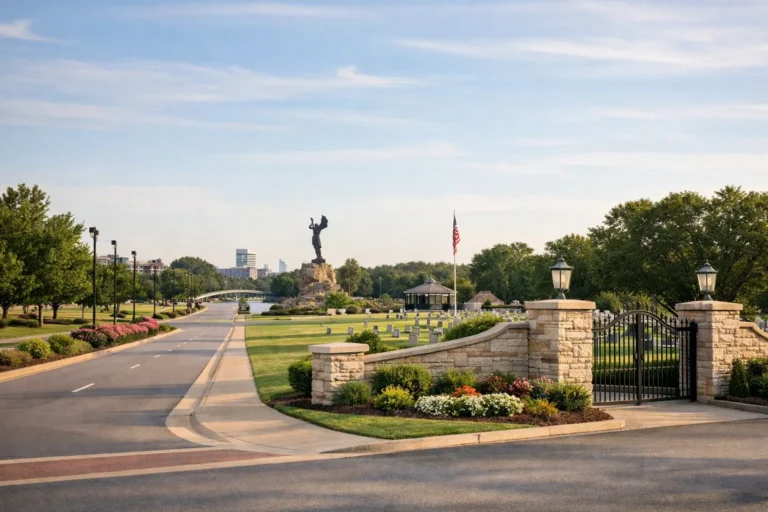
Kansas stretches from the High Plains wheat country and the Flint Hills in the west to the Kansas City metro and the Ozark foothills in the southeast, and final expense insurance needs look different across that span. Wichita, Topeka, and the Kansas side of the Kansas City metro anchor most of the state’s senior population, while small farming communities across the 105 counties often sit an hour or more from the nearest funeral home. Burial insurance gives Kansas seniors a straightforward way to cover funeral costs without burdening family, whether you’re in a retirement community in Johnson County or a rural town in the western third of the state.
Funeral and Cremation Costs in Kansas
Kansas has one of the more expensive funeral markets in the country relative to local incomes, even though overall cost of living in the state runs well below the national average. Costs vary meaningfully between the Kansas City and Wichita metros, where competition holds prices down, and the rural counties of central and western Kansas, where fewer funeral homes and longer transport distances push prices higher. The figures below reflect statewide averages for burial insurance planning, with regional variation noted where it matters.
Statewide averages
| Service type | Average cost in Kansas |
|---|---|
| Traditional full-service burial | $8,000 – $10,500 |
| Full-service cremation with memorial | $6,442 |
| Cremation memorial service | $2,080 – $4,362 |
| Direct cremation (metro low end) | $845 – $1,800 |
| Direct cremation (rural) | $1,695 – $3,500 |
| Immediate burial (no service) | $2,395 – $3,500 |
A 2025 analysis by Beca Life found that the average Kansas funeral runs approximately $12,586 when all line items are included — caskets, transportation, cemetery fees, and service charges — which placed Kansas as the least affordable state in the country for funeral services when measured against household income. That figure represents about 18.5% of the median Kansas household income of $72,639.
Regional cost variation within Kansas
Costs swing by region based on population density and provider competition. Families in the Kansas City metro (Johnson, Wyandotte, and Leavenworth counties) and the Wichita metro (Sedgwick, Butler, and Sumner counties) generally see the lowest prices because multiple funeral homes compete in the same service area. Direct cremation in the Kansas City metro starts around $845, and Wichita direct cremations begin near $995.
| Region | Typical direct cremation | Notes |
|---|---|---|
| Kansas City metro (Johnson, Wyandotte) | $845 – $1,762 | Most competitive market in the state |
| Wichita metro (Sedgwick, Butler) | $995 – $2,000 | Second-largest provider pool |
| Topeka and Shawnee County | $1,200 – $2,500 | State capital, moderate competition |
| Central Kansas (Salina, Hutchinson, Manhattan) | $1,500 – $2,800 | Regional service hubs |
| Southeast Kansas (Pittsburg, Independence) | $1,800 – $3,200 | Fewer providers, longer transport |
| Western Kansas (Garden City, Dodge City, Liberal) | $1,695 – $3,500 | Rural, sparse provider network |
The rural western half of the state — Finney, Ford, Seward, Thomas, Sherman, and surrounding counties — carries the highest direct cremation costs in Kansas. Families in these counties often travel to a funeral home in a neighboring county, and providers factor transport mileage into their pricing.
How Kansas compares to national medians
The National Funeral Directors Association’s most recent General Price List Study reports a national median cost of $8,300 for a funeral with burial (or $9,995 with a vault) and $6,280 for a funeral with cremation and viewing. Kansas traditional burial costs sit close to the national median, while full-service cremation in Kansas runs slightly above the national figure. Direct cremation is where Kansas looks most favorable — the state’s metro markets offer some of the lowest direct cremation prices in the Midwest, though rural pricing pulls the statewide average back up.
What drives cost in Kansas
Three factors shape Kansas funeral pricing more than anywhere else. First, the rural-urban split is extreme: 105 counties cover 82,000 square miles, and most of western Kansas has fewer than 10 people per square mile, which limits funeral home density. Second, cemetery and burial plot costs in Kansas City metro counties track higher than the rest of the state because of proximity to the Missouri side of the market. Third, the coroner’s permit fee for cremation varies by county — Johnson County charges $50 per cremation permit, and fees in other counties range from $0 to $75 depending on local policy. These small add-ons factor into the final bill that final expense insurance needs to cover.
Final Expense Insurance Regulations in Kansas
Kansas regulates final expense insurance through its state insurance code, which applies to all small whole life policies sold to residents regardless of where the issuing company is headquartered. The rules cover how policies must be delivered, how long you have to cancel, what happens if you replace an existing policy, and what protections you have if an insurer becomes insolvent. Knowing these rules helps Kansas seniors buy burial insurance with confidence.
Who regulates insurance in Kansas
The Kansas Insurance Department (KID), led by Commissioner Vicki Schmidt, oversees all life insurance transactions in the state under authority granted by Chapter 40 of the Kansas Statutes. The department licenses insurance companies and agents, reviews policy forms before they can be sold, investigates consumer complaints, and enforces the state’s consumer protection laws. Kansas residents can file complaints or verify an agent’s license by calling the department at 800-432-2484.
Free look period
Kansas has a 10-day free look period for life insurance policies, meaning policyholders can return a newly issued policy within 10 days of delivery for a full refund of any premiums paid. This gives buyers time to read the contract carefully, compare it against what the agent described, and back out with no financial penalty if the policy doesn’t match what they expected. The 10-day window begins on the date the policy is delivered, not the date of application.
Most final expense carriers selling in Kansas voluntarily offer 20 or 30 days as a matter of company policy, even though state law only requires 10. Always check the free look language printed on the first page of your policy — the actual number of days is stated there.
Grace period for missed premium payments
Kansas law requires insurers to grant a 31-day grace period on late premium payments. During this period, the insurance company cannot cancel the policy for nonpayment or reduce the death benefit. If the policyholder dies during the grace period, the death benefit is still paid, with the unpaid premium deducted from it. This rule does not apply to the first premium payment — that one must be paid for the policy to take effect.
Interest on late claim payments
Under Kansas Statute 40-447, if an insurer does not pay a valid death claim within 10 days, the company must pay interest on the unpaid amount until the claim is settled. This is a stronger consumer protection than many states, where the interest clock doesn’t start until 30 days or more after the claim is filed. For families waiting on a burial insurance payout to cover funeral bills, this rule matters — it keeps insurers accountable for prompt claim handling.
Replacement rules
When a Kansas senior considers replacing an existing life insurance policy with a new one, both the agent and the issuing insurer must follow state replacement regulations. The agent is required to provide written disclosures comparing the old and new policies side by side, including differences in premiums, benefits, cash value, and any new contestability period. The replacing insurer must notify the original company of the proposed replacement. These rules exist to prevent churning — the practice of convincing a policyholder to replace coverage purely so an agent can earn a fresh commission.
For seniors buying funeral life insurance, replacement is worth thinking through carefully. A new policy resets the two-year contestability period and may include a graded death benefit, meaning a full payout won’t be available if death occurs in the first two years. If an existing policy is already past its contestability period, replacing it often isn’t in the buyer’s financial interest.
Graded death benefit policies
Kansas permits insurers to sell guaranteed issue final expense policies with a graded death benefit, which is the standard structure for no-health-questions burial insurance. Under a typical graded policy, if the insured dies from natural causes in the first two years, the beneficiary receives a return of premiums paid plus interest (usually 10%) rather than the full face amount. Death from accidental causes is paid at full face value from day one. After the two-year graded period ends, the full death benefit is available regardless of cause of death. Kansas has no state-specific rule shortening or extending this period — the two-year structure is standard across nearly all carriers selling in the state.
Kansas Life & Health Insurance Guaranty Association
Every insurance company licensed to sell life insurance in Kansas is required to be a member of the Kansas Life & Health Insurance Guaranty Association. If a member insurer becomes insolvent, the guaranty association protects Kansas policyholders for up to $300,000 in death benefits and $100,000 in cash surrender value per individual. This protection applies automatically to final expense insurance policies issued by licensed carriers and does not require any action from the policyholder. Before buying burial insurance in Kansas, consumers can verify that a company is licensed in the state by calling the Kansas Insurance Department.
Senior-specific consumer protections
Kansas law gives the insurance commissioner broad authority to investigate unfair sales practices targeting seniors, and the department actively pursues cases of insurance fraud and financial exploitation. As of July 1, 2024, investment advisers and broker-dealers registered in Kansas are required to report suspected financial exploitation of older or vulnerable adults — a protection that extends to situations where a senior is being pressured into buying an unsuitable insurance product. Kansas seniors who feel pressured by an agent, or who suspect a family member has been misled about a final expense policy, can file a complaint directly with the Kansas Insurance Department.
Funeral and Burial Laws in Kansas
Kansas law sets specific requirements for what must happen after a death — who files the death certificate, how quickly, when embalming is required, what permits must be in place before a cremation can occur, and who has the legal authority to direct final disposition. The Kansas Board of Mortuary Arts oversees funeral directors, embalmers, and crematory operators, while the Kansas Department of Health and Environment manages death certificates and vital records. These rules shape how funeral insurance funds get used and what documentation your family will need.
Death certificate filing
Under Kansas Statute 65-2412, a death certificate must be filed with the state registrar within three days of death and before final disposition of the body. Filing is handled electronically through the Electronic Death Registration System (EDRS), which is accessible only to funeral directors, attending physicians, and medical examiners — private citizens cannot sign up for direct access. If the death occurred without medical attendance or was not from natural causes, the county coroner must investigate and sign the medical certification within 24 hours of receiving the death certificate.
The funeral director typically handles the filing and obtains certified copies for the family. Executors should order at least 10 certified copies, since banks, insurers, the Social Security Administration, and the VA each require originals to release funds or benefits.
Burial permit requirements
Kansas does not require a separate burial permit in the way some states do. What is legally required is the filed death certificate and, for cremation, a coroner’s cremation authorization. Once the death certificate is filed and the funeral director has the required disposition authorizations, burial can proceed. Some cemeteries have their own interment paperwork, but no statewide burial permit is needed.
Embalming rules
Embalming is not required by Kansas law in most circumstances. A body may be buried or cremated without embalming if disposition occurs within 24 hours of death, or longer when religious practices prohibit weekend or holy-day burial and no health hazard results from the delay. If final disposition will take longer than 24 hours, Kansas regulations require the body to be either embalmed or kept under refrigeration. Refrigeration serves the same purpose as embalming for preservation and is often the preferred option for families choosing a direct cremation or a simple burial.
One Kansas-specific rule worth noting: state law prohibits the transport of an unembalmed human body by a commercial shipping or transportation company. If remains need to be shipped across state lines by a carrier, embalming is effectively required.
Cremation authorization
Cremation in Kansas requires more paperwork than burial. Under Kansas Statute 65-1762, a crematory must receive a completed cremation authorization form signed by the legally authorized person, along with a coroner’s permit to cremate issued under K.S.A. 65-2426a. The cremation authorization identifies who ordered the cremation, the intended disposition of the cremated remains, and confirmation that any pacemakers, defibrillators, or other hazardous implants have been removed.
Kansas law does not impose a statewide waiting period between death and cremation, though most county coroners take 24 to 48 hours to issue the cremation permit. Coroner’s permit fees vary by county — Johnson County charges $50 per cremation permit, and other counties range from $0 to $75.
Who can authorize final disposition
Kansas Statute 65-1734 establishes the order of priority for who can legally direct final disposition of a decedent’s remains. The list runs, in order: the agent named in a durable power of attorney for health care decisions, the surviving spouse, the decedent’s adult children (with written notification to all other adult children required if more than one), the decedent’s parents, adult siblings, and then more distant relatives under Kansas intestacy law. A guardian of the decedent at the time of death also has priority above more distant relatives.
This order matters for final expense planning. Naming a specific person as your funeral insurance beneficiary does not automatically give them the legal authority to direct your funeral arrangements — Kansas law assigns that authority based on the priority list above. Seniors who want a specific adult child or trusted friend to handle arrangements should name that person in a written directive.
Home funeral legality
Home funerals are fully legal in Kansas. The Kansas Board of Mortuary Arts explicitly states that families may bury their own dead, provided they file the required paperwork and comply with state, federal, and local health laws. A funeral home is not legally required except in cases involving certain infectious or contagious diseases as defined by the Kansas Department of Health and Environment. Families choosing a home funeral are responsible for filing the death certificate, handling transportation, and obtaining any required permits — which is why most families still work with a funeral director even when keeping services simple.
Burial on private property
Kansas law does not require burial in a cemetery and does not prohibit burial on private land. Families considering a private burial should check county and city zoning ordinances, which can restrict burial on non-cemetery property in some jurisdictions. The Kansas Board of Mortuary Arts recommends that families who bury on private land draw a map of the burial location and file it with the property deed so the burial site is documented for future owners.
Burial at sea
Kansas is a landlocked state, so at-sea burial within Kansas jurisdiction is not an option. Families wishing to conduct a burial at sea typically travel to the Gulf Coast or an Atlantic or Pacific port and work with a licensed provider under federal EPA rules, which require burial to occur at least three nautical miles from shore in water at least 600 feet deep.
Green burial
Green burial is fully legal in Kansas and has taken hold in several locations. Oak Hill Cemetery in Lawrence, approved by the Lawrence City Commission in 2008, was the first natural burial section in Kansas and the first municipally operated green burial area in the United States. Heart Land Prairie Cemetery in Ottawa County is the state’s first all-natural burial ground — a stand-alone conservation burial site rather than a hybrid section. Topeka Cemetery also offers Green Burial Council-certified natural burial options, and Highland Cemetery in Prairie Village (in the Kansas City metro) accommodates natural burials using vault-free techniques. Families interested in green burial can check the Green Burial Council for certified providers across the state.
The Kansas Board of Mortuary Arts
The Kansas Board of Mortuary Arts licenses and regulates funeral directors, embalmers, funeral establishments, and crematory operators across the state. The board handles complaints against licensed funeral providers, inspects funeral establishments and crematories, and publishes consumer resources including its Facts About Funerals guide. Kansans who believe a funeral home has overcharged, misrepresented services, or violated state regulations can file a complaint with the board directly. The agency is the primary state-level consumer protection authority for the funeral industry in Kansas.
Regions and Major Metros in Kansas
Kansas divides cleanly into recognizable regions shaped by geography, rainfall, and settlement patterns. The eastern third of the state is hilly, wooded in pockets, and contains the bulk of the population. The central third — the Flint Hills, Smoky Hills, and Arkansas River lowlands — is a transition zone of rolling prairie and farm country. The western third is High Plains: flat, dry, thinly populated, and almost entirely agricultural. Understanding which region a senior lives in helps frame what final expense insurance needs to cover, since funeral availability and cost differ sharply between metro Kansas and the open plains.
Named regions of Kansas
| Region | Description |
|---|---|
| Kansas City Metro (Northeast) | Urban and suburban corridor on the Missouri border, home to Johnson and Wyandotte counties; wealthiest and most densely populated region of the state |
| Northeast / Glaciated Region | Rolling, wooded terrain around Lawrence, Topeka, and Atchison; shaped by ancient ice sheets that left boulders, silt, and rich soils |
| Flint Hills | Tallgrass prairie stretching from Marshall County in the north to Cowley County in the south; the largest intact tallgrass prairie in North America; cattle ranching country anchored by Manhattan and Emporia |
| Smoky Hills (North-Central) | Dissected uplands with rocky outcrops around Salina, Hays, and Concordia; wind farms and wheat country |
| South-Central / Arkansas River Lowlands | Flat to gently rolling land along the Arkansas River; anchored by Wichita and Hutchinson; aviation manufacturing and irrigation farming |
| Southeast / Cherokee Lowlands | Former coal mining region around Pittsburg, Parsons, and Independence; wetter and more wooded than the rest of the state, with a corner of the Ozark Plateau |
| High Plains (Western Third) | Flat, dry, sparsely populated wheat and cattle country; includes Garden City, Dodge City, Liberal, Colby, and Goodland; elevation rises to 4,039 feet at Mount Sunflower near the Colorado border |
Counties by region
Kansas has 105 counties, which group into regions roughly as follows. Metro-area classifications follow the Office of Management and Budget’s 2023 statistical area delineations.
| Region | Counties |
|---|---|
| Kansas City Metro | Johnson, Wyandotte, Leavenworth, Miami, Linn |
| Northeast / Glaciated | Douglas, Shawnee, Jefferson, Atchison, Brown, Doniphan, Jackson, Nemaha, Marshall, Pottawatomie, Osage, Franklin, Anderson |
| Flint Hills | Riley, Geary, Wabaunsee, Morris, Lyon, Chase, Greenwood, Butler, Cowley, Chautauqua, Elk |
| Smoky Hills / North-Central | Saline, Dickinson, Ottawa, Clay, Cloud, Republic, Washington, Mitchell, Lincoln, Ellsworth, Russell, Osborne, Smith, Jewell, Phillips, Rooks, Ellis |
| South-Central / Arkansas River Lowlands | Sedgwick, Butler, Harvey, Sumner, Reno, McPherson, Rice, Marion, Kingman, Harper, Barber, Pratt, Stafford, Edwards, Barton, Pawnee |
| Southeast / Cherokee Lowlands | Crawford, Cherokee, Labette, Montgomery, Neosho, Wilson, Woodson, Allen, Bourbon, Coffey |
| High Plains / Western | Decatur, Norton, Graham, Sheridan, Thomas, Sherman, Cheyenne, Rawlins, Wallace, Logan, Gove, Trego, Ness, Lane, Scott, Wichita, Greeley, Hamilton, Kearny, Finney, Hodgeman, Rush, Hamilton, Stanton, Grant, Haskell, Gray, Ford, Meade, Clark, Seward, Stevens, Morton, Comanche, Kiowa |
Note: Butler County appears in both the South-Central and Flint Hills listings above because the Flint Hills physiographic region crosses into eastern Butler County, while the county’s population and economic ties run to Wichita. For directory purposes, Butler is typically grouped with the Wichita metro.
Top metros in Kansas
| Metro area | 2024 population | Core counties in Kansas |
|---|---|---|
| Kansas City (Kansas portion) | ~1,000,000 (of 2.2 million total bi-state metro) | Johnson, Wyandotte, Leavenworth, Miami, Linn |
| Wichita MSA | ~650,000 | Sedgwick, Butler, Harvey, Sumner, Kingman |
| Topeka MSA | ~232,000 | Shawnee, Jackson, Osage, Wabaunsee, Jefferson |
| Lawrence MSA | ~122,000 | Douglas |
| Manhattan MSA | ~130,000 | Riley, Geary, Pottawatomie |
| Salina MSA | ~61,000 | Saline, Ottawa |
| Hutchinson Micropolitan | ~62,000 | Reno |
Wichita is the largest city in Kansas at approximately 398,000 residents, followed by Overland Park (200,000), Kansas City (155,000), Olathe (145,000), and Topeka (126,000). The Kansas City metro anchored on the Missouri side is the largest overall metro area containing Kansas counties, with more than 2.2 million residents across 14 counties in the bi-state region.
How metros cluster into counties
The Kansas City metro on the Kansas side covers Johnson County (Overland Park, Olathe, Lenexa, Shawnee), Wyandotte County (Kansas City, KS), Leavenworth County, Miami County, and Linn County. The Wichita metro is anchored in Sedgwick County and extends into Butler (El Dorado, Andover), Harvey (Newton), Sumner (Wellington), and Kingman counties. The Topeka metro covers Shawnee County plus Jackson, Osage, Wabaunsee, and Jefferson counties. Manhattan’s metro straddles Riley, Geary, and Pottawatomie counties, with Fort Riley — one of the largest Army installations in the country — driving a significant share of the local population.
Senior demographics relevant to final expense planning
Kansas seniors concentrate heavily in metro and micropolitan areas. The Kansas City metro on the Kansas side holds the largest senior population in absolute numbers, while Wichita, Topeka, and Lawrence follow. Johnson County, home to Overland Park and Olathe, has one of the highest median household incomes in the state and a large population of affluent retirees. Lawrence and Manhattan are college towns with smaller senior populations and sizable university retiree communities.
Rural western Kansas has the oldest population share in the state. Counties like Osborne, Smith, Jewell, Lincoln, and Ness have median ages well above the state average, with senior populations that often exceed 25% of county residents. These counties also have the fewest funeral homes and insurance agents per capita, which makes burial insurance particularly valuable — families often need coverage that works regardless of which funeral provider ends up handling arrangements.
Kansas also has a substantial military retiree population concentrated around Fort Riley (Geary and Riley counties), Fort Leavenworth (Leavenworth County), and McConnell Air Force Base (Sedgwick County). Veterans and their spouses often qualify for additional burial benefits through the VA, including interment at Fort Leavenworth National Cemetery or Leavenworth National Cemetery, which can reduce the total funeral cost that a final expense policy needs to cover.
Counties We Serve in Kansas
Palmetto Mutual’s burial insurance coverage is available to seniors in every county across Kansas. The directory below lists all 105 counties in the state, from the Kansas City suburbs of Johnson and Wyandotte to the far western High Plains counties along the Colorado border. Select your county to find local funeral cost data, cemetery options, and final expense insurance details specific to where you live.
Frequently Asked Questions

About the Author
Dvir Mosche is an award-winning independent insurance agent and the founder of Palmetto Mutual, a trusted insurance brokerage specializing in Final Expense Life Insurance. Since entering the industry in 2017, he has been recognized multiple times as a top agent for his dedication to educating and assisting seniors in finding the proper coverage. His mission is to simplify the process, provide honest and personalized guidance, and ensure that every client gets coverage they can depend on for life.


