
Home > Minnesota
Final Expense Insurance in Minnesota — A Complete Guide for Seniors Planning Ahead
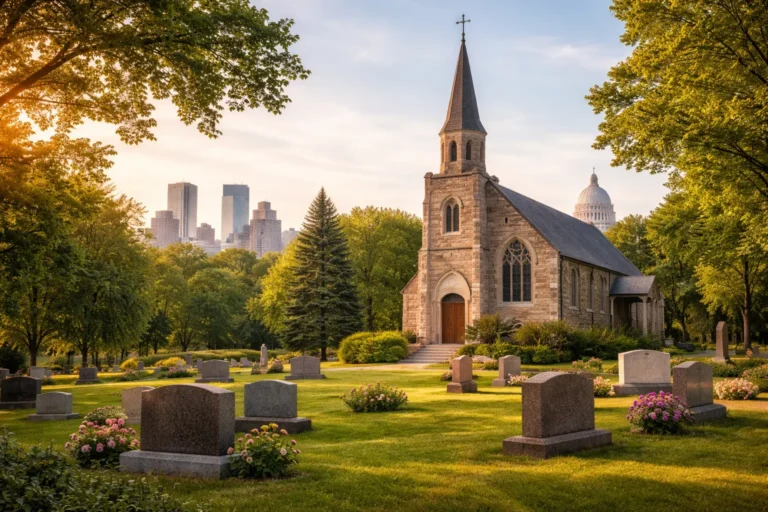
Minnesota’s identity runs from the Iron Range and the North Shore of Lake Superior down through the Twin Cities metro and into the farmland of the southern prairie, and final expense insurance needs look different in each part of the state. The senior population is concentrated heaviest in Greater Minnesota — the rural counties outside the Minneapolis–Saint Paul metro — where funeral home access, cremation preferences, and cost of living all differ meaningfully from Hennepin and Ramsey counties. This guide covers statewide funeral costs, Minnesota’s insurance regulations, state burial laws, and every county we serve, so you can understand how burial insurance fits your family’s plans wherever you live.
Funeral and Cremation Costs in Minnesota
Funeral costs in Minnesota generally run slightly below the national median, with meaningful variation between the Twin Cities metro, the Duluth and Rochester markets, and the rural counties of Greater Minnesota. Burial remains common in many small-town and farming communities, but cremation has become the statewide majority preference. The figures below reflect statewide averages and should be used as a planning baseline — individual funeral homes set their own prices under the Federal Trade Commission’s Funeral Rule.
Statewide averages
| Service type | Minnesota average | National median (NFDA 2024) |
|---|---|---|
| Traditional full-service burial | $8,000–$9,500 | $9,995 (with vault) |
| Full-service cremation | $7,000–$7,800 | $6,280 |
| Direct cremation | $1,500–$3,500 | $2,202 |
| Immediate (affordable) burial | $5,500–$6,200 | — |
| Embalming | $750–$850 | $845 |
| Basic casket | $1,000–$1,200 | — |
Source: Funeralocity Minnesota cost data, NFDA 2023 General Price List Study, and US Funerals Online — Minnesota cremation costs.
Regional cost variation within Minnesota
- Twin Cities metro (Hennepin, Ramsey, Dakota, Anoka, Washington, Scott, Carver counties). The most expensive market in the state. Full-service burial in the metro commonly exceeds $9,500 once cemetery charges are included. Minneapolis and Saint Paul cemetery interment fees for casketed burial generally run $1,400 to $2,000, with cremation interment fees of several hundred dollars on top of funeral home charges.
- Rochester and southeast Minnesota. Costs sit slightly below Twin Cities pricing, with a strong cremation preference driven partly by Mayo Clinic’s role in the region’s aging population and end-of-life planning patterns.
- Duluth, Iron Range, and the North Shore. Moderate pricing overall. Cremation is heavily preferred here, and direct cremation packages at the lower end of the statewide range are common.
- Greater Minnesota — prairie, farmland, and lakes country. Generally the least expensive part of the state. Rural funeral homes often quote full-service burials at the lower end of the statewide range, and direct cremation can be found under $2,000 at some providers. Cemetery costs are also lower outside the metros.
What drives cost differences in Minnesota
Cost of living in the Twin Cities pushes funeral home overhead and cemetery prices up, while rural Greater Minnesota sees lower labor, facility, and land costs. Cemetery vault and interment fees are a major swing factor — urban cemetery charges can add $2,000 to $4,000 beyond the funeral home bill, while rural church cemeteries often charge far less. Minnesota’s long winters also affect timing: ground conditions can delay burial in December through March, and some families choose cremation with a spring committal to avoid winter interment fees. For families planning ahead, burial insurance in Minnesota is typically sized between $10,000 and $20,000 to cover these combined funeral home and cemetery costs.
Final Expense Insurance Regulations in Minnesota
Minnesota regulates life insurance — including final expense and burial life insurance policies — at the state level through the Department of Commerce. The rules below apply to any policy issued in Minnesota or by a life insurance company organized under Minnesota law, regardless of which carrier you buy from. Understanding these protections helps seniors shopping for coverage know what carriers must provide and what recourse is available if something goes wrong.
Who regulates insurance in Minnesota
The Minnesota Department of Commerce, Insurance Division is the state’s insurance regulator. It licenses insurers and agents, reviews policy forms and rates, investigates consumer complaints, and enforces Minnesota insurance law. The Commissioner of Commerce oversees the department and is appointed by the governor. Complaints can be filed directly through the department’s website or by calling 651-539-1500.
Key consumer protections for Minnesota policyholders
| Protection | Minnesota rule | Source |
|---|---|---|
| Free look period | 10 days to cancel a new policy for a full premium refund | Minnesota Department of Commerce |
| Grace period | 1-month grace period for every premium after the first, during which coverage stays in force | Minn. Stat. § 61A.03 |
| Contestability period | 2 years from policy date — after that, the insurer cannot contest the policy except for nonpayment | Minn. Stat. § 61A.03 |
| Suicide clause | Insurers may exclude death benefits for suicide within 1 year of issue, but must refund all premiums paid if a claim is denied on this ground | Minn. Stat. § 61A.031 |
| Claim payment | Claims must generally be settled within 60 days; interest accrues on delayed payments | Minnesota insurance code |
| Insolvency protection | Up to $500,000 in death benefits and $130,000 in cash surrender value per insured life through the Minnesota Life & Health Insurance Guaranty Association | Minnesota Guaranty Association |
What these rules mean for final expense buyers
The 10-day free look is your single most important protection at the point of purchase. From the day your policy is delivered, you have a full 10 days to read the contract, confirm the coverage amount, premium, and any graded death benefit period match what you were quoted, and cancel for a full refund if anything is off. Most final expense policies sold to seniors 55 and older are either fully underwritten or offered as guaranteed-issue whole life with a graded death benefit — typically paying only a return of premium plus interest if death occurs in the first two years from natural causes, then full coverage after. Minnesota does not mandate a specific graded benefit structure, so the terms vary by carrier and make the free look period especially important for comparing what you signed up for against what was delivered.
The two-year contestability window is standard across states and applies to any Minnesota policy. During this period, an insurer can investigate and deny a claim if the application contained material misrepresentations about health history. After two years, the policy becomes incontestable except for nonpayment of premiums, which is why truthful answers on the application matter even on simplified-issue burial insurance. For seniors replacing an existing policy with a new final expense plan, Minnesota follows the NAIC replacement model — agents must provide written replacement notices, and the new policy starts a fresh two-year contestability clock. Replacing a policy late in life is rarely the right move unless the pricing or coverage gap is substantial.
Funeral and Burial Laws in Minnesota
Minnesota law governing funerals, burials, and cremations is contained primarily in Minnesota Statutes Chapter 149A — Mortuary Science; Disposition of Dead Bodies. The Minnesota Department of Health, Mortuary Science Section licenses funeral establishments, crematories, alkaline hydrolysis facilities, and natural organic reduction facilities, and enforces the rules below. Cemeteries are governed separately under Chapters 306 (public cemeteries) and 307 (private cemeteries) and are enforced by local governments.
Death certificate and disposition permit
Minnesota requires a death certificate to be filed with the state registrar of vital records within 5 days of death and before final disposition (Minn. Stat. §§ 149A.90 and 149A.93). The funeral director ordinarily completes this filing on behalf of the family. A disposition permit is required before any burial, entombment, cremation, alkaline hydrolysis, or natural organic reduction, and must be filed with the person in charge of the place of final disposition — a cemetery sexton, crematory manager, or similar official. Certified copies of a Minnesota death certificate cost $13 for the first copy and $6 for each additional copy, obtained through the county registrar or the Minnesota Department of Health.
Embalming rules
Minnesota does not require embalming in most circumstances. Under Minn. Stat. § 149A.91, if final disposition will not occur within 72 hours of death, the body must be either embalmed, refrigerated, or packed in dry ice. Refrigeration can extend the timeline to a maximum of 6 calendar days; dry ice to 4 calendar days. Funeral providers are required to disclose on their general price list that embalming is not legally required except in specific cases, and that alternatives such as direct cremation, immediate burial, or refrigeration are available (Minn. Stat. § 149A.72). Embalming is effectively required when a body is transported on a commercial aircraft (Minn. Stat. § 149A.93, subd. 7).
Cremation rules
Cremation in Minnesota requires a signed cremation authorization from the person with legal right to control disposition, a disposition permit, and either a completed death record or a signed release from the coroner or medical examiner (Minn. Stat. § 149A.95). A casket is not required for cremation — Minnesota law allows the use of a cremation container made of fiberboard, cardboard, or similar combustible material, and funeral providers must disclose this in writing. Crematories must maintain records of every cremation for 3 years in original form and 10 years in alternative format. Alkaline hydrolysis (water cremation) is legal in Minnesota at facilities licensed by the Minnesota Department of Health (Minn. Stat. § 149A.941).
Natural organic reduction (human composting)
Effective July 1, 2025, natural organic reduction — often called human composting — became legal in Minnesota as a form of final disposition, with facilities licensed by the commissioner of health under Minn. Stat. § 149A.955. This makes Minnesota one of a small but growing number of states to authorize the process.
Home funerals and private burial
Home funerals are legal in Minnesota. Families may care for their own dead, arrange for disposition, and file the necessary paperwork without using a funeral director, though some crematories require a funeral director be involved for cremation arrangements. Minnesota law also allows any private person or religious corporation to establish a cemetery on private property (Minn. Stat. § 307.01), provided the land is surveyed and the plat recorded with the county recorder’s office. Local zoning rules often restrict where private burials can occur, so families must check with the county or town clerk before planning a backyard burial.
Green burial
Green burial is legal in Minnesota and growing in availability, though options remain concentrated in the Twin Cities metro. The Minnesota Legislature imposed a temporary moratorium from July 1, 2023 to July 1, 2025 on establishing new green burial grounds outside existing cemeteries pending further study. Currently, the Green Burial Council certifies a small number of Minnesota cemeteries, including Resurrection Cemetery (Mendota Heights) and Mound Cemetery of Brooklyn Center. Hybrid cemeteries such as Roselawn (Roseville) and Prairie Oaks Memorial Eco Gardens (Inver Grove Heights) also offer natural burial options.
Burial at sea
Minnesota has no coastline, so burial at sea is not a practical option for most Minnesotans. Families choosing this disposition typically coordinate with a funeral provider and ship cremated remains for scattering through the Environmental Protection Agency’s burial-at-sea program, which is regulated federally rather than under Minnesota law.
Funeral industry consumer protections
Minnesota’s funeral industry practice rules (Minn. Stat. §§ 149A.70 to 149A.76) incorporate and expand on the federal Funeral Rule. Funeral providers must give itemized price lists, cannot require the purchase of any goods or services as a condition of providing others (except where required by law), cannot require a casket for cremation, and must disclose in writing that outer burial containers are not required by state law. These protections give Minnesota families buying funeral life insurance coverage a clear framework for comparing prices across providers — the funeral home’s general price list is a legal document, and its disclosures must be accurate.
Regions and Major Metros in Minnesota
Minnesota divides into two broad halves in everyday conversation: the Twin Cities metro, which holds about 60% of the state’s 5.8 million residents, and Greater Minnesota (sometimes called Outstate Minnesota), which covers the other roughly 40% spread across prairie, lake country, forest, and the Lake Superior shoreline. Within those two halves, Minnesotans recognize several named regions with distinct geography, economy, and demographic patterns.
Named regions of Minnesota
- Twin Cities Metropolitan Area — Minneapolis, Saint Paul, and their suburbs in the seven-county core. The economic, political, and cultural center of the state.
- Central Minnesota — The lakes-and-farmland region centered on St. Cloud, stretching north into Brainerd Lakes country. A popular retirement and second-home area.
- Southeast Minnesota (Bluff Country / Driftless Region) — Rochester and the limestone bluff country along the Mississippi River. Anchored by the Mayo Clinic.
- Southwest Minnesota (Prairie) — Farmland, small towns, and the Minnesota River Valley, centered loosely on Mankato and Worthington.
- Northwest Minnesota (Red River Valley) — Flat, fertile farmland along the North Dakota border, anchored by Moorhead and extending north toward the Canadian border.
- Arrowhead Region — The northeastern corner along Lake Superior, containing Duluth, the North Shore, the Iron Range (Mesabi and Vermilion), the Boundary Waters, and Voyageurs National Park. Includes Carlton, Cook, Lake, and St. Louis counties, with Aitkin, Itasca, and Koochiching sometimes grouped in.
- Northwoods / North Central — The forested lake country north of Brainerd — Bemidji, Grand Rapids, and the headwaters of the Mississippi at Itasca State Park.
Top metropolitan areas in Minnesota by population
| Metro area | Metro population | Counties included |
|---|---|---|
| Minneapolis–Saint Paul–Bloomington | ~3.76 million | Hennepin, Ramsey, Dakota, Anoka, Washington, Scott, Carver (MN core); plus Chisago, Isanti, Sherburne, Wright, Le Sueur, Mille Lacs, Sibley |
| Duluth | ~282,000 | St. Louis, Carlton (MN); Douglas (WI) |
| Rochester | ~229,000 | Olmsted, Dodge, Fillmore, Wabasha |
| St. Cloud | ~200,000 | Stearns, Benton, Sherburne |
| Mankato | ~104,000 | Blue Earth, Nicollet, Le Sueur |
| Fargo–Moorhead (MN portion) | ~250,000 metro (Clay Co. MN side) | Clay (MN); Cass (ND) |
| Grand Forks–East Grand Forks (MN portion) | ~100,000 metro | Polk (MN); Grand Forks (ND) |
Source: US Census Bureau 2023/2024 metropolitan population estimates.
County clustering by region
| Region | Counties |
|---|---|
| Twin Cities (7-county core) | Hennepin, Ramsey, Dakota, Anoka, Washington, Scott, Carver |
| Twin Cities (greater commuter ring) | Chisago, Isanti, Sherburne, Wright, Le Sueur, Mille Lacs, Sibley |
| Southeast (Rochester / Bluff Country) | Olmsted, Dodge, Fillmore, Wabasha, Winona, Houston, Goodhue, Mower, Steele, Freeborn, Rice |
| South Central (Mankato area) | Blue Earth, Nicollet, Le Sueur, Waseca, Faribault, Martin, Watonwan, Brown |
| Southwest (Prairie) | Cottonwood, Jackson, Murray, Nobles, Pipestone, Rock, Redwood, Lyon, Lincoln, Yellow Medicine |
| West Central | Big Stone, Chippewa, Kandiyohi, Lac qui Parle, McLeod, Meeker, Renville, Swift |
| Central / St. Cloud | Stearns, Benton, Morrison, Todd, Douglas, Pope, Stevens, Traverse, Wilkin, Grant |
| Brainerd Lakes / North Central | Crow Wing, Cass, Aitkin, Hubbard, Wadena |
| Northwoods / Headwaters | Beltrami, Clearwater, Itasca, Koochiching, Lake of the Woods |
| Red River Valley / Northwest | Clay, Polk, Norman, Mahnomen, Becker, Otter Tail, Kittson, Marshall, Pennington, Red Lake, Roseau |
| Arrowhead / North Shore / Iron Range | St. Louis, Carlton, Lake, Cook |
Demographics relevant to final expense planning
Minnesota has an aging population that skews older outside the Twin Cities. Greater Minnesota — particularly the Iron Range, the Brainerd Lakes, the Mississippi headwaters country, and the Southeast bluff country — has senior population shares well above the state average, driven by retirees staying put and younger residents migrating to the metro for work. The Minnesota State Demographic Center projects that by 2030, Minnesotans 65 and older will outnumber school-age children for the first time in state history.
Several demographic patterns shape final expense insurance needs across the state. The Twin Cities metro is home to Minnesota’s largest concentration of veterans eligible for Fort Snelling National Cemetery burial benefits. Rochester draws a consistent inflow of medical retirees who came to the region for Mayo Clinic care and stayed. The Brainerd Lakes and Alexandria areas have become year-round retirement destinations as lake cabins convert to primary residences. Iron Range communities in St. Louis, Itasca, and Crow Wing counties have some of the state’s highest median ages — decades of younger residents leaving for metro jobs have left an older core behind. These patterns mean that while a $10,000 to $15,000 burial life insurance policy covers typical costs in most of the state, Twin Cities families planning traditional burial often size coverage at $15,000 to $20,000 to cover higher metro cemetery costs.
Counties We Serve in Minnesota
Palmetto Mutual serves families across all 87 counties in Minnesota. The directory below covers every county in the state, from the Twin Cities metro down to the southern farmland, up through the Brainerd Lakes and the Red River Valley, and out to the Arrowhead on Lake Superior. Select your county below to find county-specific information on funeral costs, local cemeteries, and final expense coverage tailored to your area.
Frequently Asked Questions

About the Author
Dvir Mosche is an award-winning independent insurance agent and the founder of Palmetto Mutual, a trusted insurance brokerage specializing in Final Expense Life Insurance. Since entering the industry in 2017, he has been recognized multiple times as a top agent for his dedication to educating and assisting seniors in finding the proper coverage. His mission is to simplify the process, provide honest and personalized guidance, and ensure that every client gets coverage they can depend on for life.


