
Home > Montana
Final Expense Insurance in Montana — A Statewide Guide for Seniors Planning Ahead
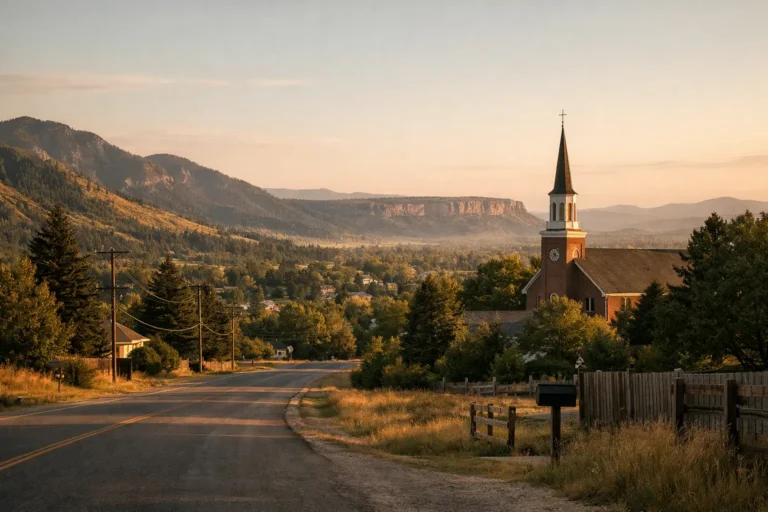
Montana is a big state with a small population, and that shapes nearly everything about end-of-life planning here. Seniors in Billings, Missoula, and the Flathead Valley face different realities than those in the wide-open counties east of the Continental Divide, where the nearest funeral home may sit an hour or more down the road. Montana’s retiree communities along the Rockies, its aging ranching population on the high plains, and its strong tradition of simple, unfussy burials all factor into how families here think about burial insurance and final arrangements.
Funeral and Cremation Costs in Montana
Funeral costs in Montana run close to the national median, but the state’s vast geography creates meaningful price differences between its western mountain communities and its eastern plains. Cremation is the dominant choice here — Montana’s cremation rate is among the highest in the country, driven by the state’s rural character, independent-minded culture, and the practical reality of transporting remains across long distances. The figures below reflect statewide averages and regional variation for the most common service types.
Statewide average costs
| Service type | Montana average | National median (NFDA) |
|---|---|---|
| Traditional burial with viewing | $7,800 – $9,200 | $8,300 |
| Full-service cremation | $5,400 – $6,800 | $6,280 |
| Direct cremation | $1,400 – $2,600 | $2,500 – $3,000 |
| Immediate burial (no viewing) | $3,200 – $4,800 | $3,500 – $4,500 |
| Graveside service only | $3,800 – $5,400 | — |
Figures draw on the National Funeral Directors Association 2024 General Price List Study, Funeralocity’s Montana market data, and Ever Loved’s state pricing reports. Cemetery costs — plot, opening and closing, headstone — typically add $2,500 to $5,500 on top of funeral home charges.
Regional cost variation within Montana
Montana’s costs vary more by region than by city size, because the state’s geography creates distinct markets.
Western Montana (Missoula, Kalispell, Bitterroot Valley, Flathead Valley). The highest funeral costs in the state. Retirement migration into the Flathead and Bitterroot valleys has pushed cost of living up, and funeral home pricing has followed. Traditional burials in Kalispell or Missoula often run $8,500 to $9,500. Cemetery plots in the Flathead Valley can exceed $3,000 on their own.
South-central Montana (Billings, Bozeman, Livingston). Billings is the state’s largest city and its most competitive funeral market, which keeps prices closer to the statewide average. Bozeman has seen sharp cost increases as the Gallatin Valley has grown, with funeral and cemetery costs now rivaling western Montana. Traditional burial in Bozeman frequently runs $9,000 or higher.
Eastern Montana (Miles City, Glendive, Sidney, Glasgow). The lowest funeral costs in the state, though the savings can be offset by travel distances. Rural funeral homes east of the Continental Divide often charge $6,500 to $7,500 for traditional burial and under $2,000 for direct cremation. Many small-town funeral homes serve multiple counties, and families sometimes drive 60 to 100 miles to the nearest provider.
North-central Montana (Great Falls, Havre, Lewistown). Costs sit between western and eastern Montana. Great Falls has several established funeral homes with competitive pricing, while the smaller high-line towns along US-2 run closer to eastern Montana rates.
How Montana compares nationally
Montana’s traditional burial costs sit slightly below the national median, while cremation costs track close to or slightly above the national median — a pattern driven by the state’s high cremation rate and the fixed overhead of running a funeral home across a sparsely populated service area. The Funeral Consumers Alliance has documented that in states with large rural footprints, the per-service cost of cremation often runs higher than in dense urban markets, because the volume simply isn’t there to spread overhead.
What drives cost in Montana
Several state-specific factors shape what families actually pay.
Geography is the biggest single driver. A funeral home in Ekalaka or Jordan serves a trade area the size of a small state, and transportation of remains, staff time, and travel for graveside services all add up. Cemetery costs vary widely — municipal cemeteries in small towns may charge $400 to $800 for a plot, while private cemeteries in Kalispell, Bozeman, or Missoula can charge $2,500 to $4,000 for the same plot. Montana also has a strong tradition of family and ranch burials in the rural counties, which can reduce costs significantly where zoning allows. Finally, the state’s high cremation rate — consistently above 75% in recent years, per Cremation Association of North America data — means most Montana families are working from a lower cost baseline than families in states where traditional burial still dominates.
A final expense insurance policy in Montana is typically structured to cover these costs in the $10,000 to $20,000 range, with higher coverage amounts common in western Montana and the Gallatin Valley where total costs run highest.
Final Expense Insurance Regulations in Montana
Final expense insurance in Montana is a small whole life policy regulated under the state’s general life insurance laws. Montana’s regulatory framework offers several consumer protections that matter for seniors — a longer-than-average free look period, specific replacement rules, and an active state commissioner’s office that handles complaints directly. The rules below cover the state-specific provisions most relevant to someone purchasing a burial insurance policy in Montana.
Who regulates insurance in Montana
The Montana Commissioner of Securities and Insurance (CSI), also known as the State Auditor’s Office, regulates all insurance sold in the state. The office licenses agents, approves policy forms, investigates consumer complaints, and enforces Montana’s insurance code (Title 33, Montana Code Annotated). Montana is one of a handful of states where the insurance commissioner is an independently elected office rather than a governor’s appointee, which gives the role a direct line of accountability to Montana voters. The CSI maintains a consumer services division that handles complaints about agents, carriers, and claims disputes — reachable at csimt.gov.
Free look period
Montana requires a 30-day free look period on life insurance policies sold to applicants age 65 and older, under Montana Code Annotated § 33-20-1403. This is one of the longer free look periods in the country — the national standard is 10 days, and many states set 10 to 20 days for seniors. During the 30-day window, a policyholder can cancel the policy for any reason and receive a full refund of all premiums paid. Because final expense insurance is overwhelmingly sold to applicants in that age bracket, the 30-day window applies to nearly every burial insurance policy issued in Montana.
For applicants under 65, the standard free look period on individual life policies in Montana is 10 days from the date the policy is delivered.
Replacement rules
Montana has adopted the NAIC Life Insurance and Annuities Replacement Model Regulation, codified in Montana Administrative Rule 6.6.902 and related sections. When an agent sells a policy that replaces an existing life insurance policy, the agent must:
- Provide the applicant with a written Notice Regarding Replacement at the time of application
- Submit a replacement notice to the existing insurer, giving that carrier the opportunity to conserve the policy
- Retain replacement paperwork for at least five years
For seniors specifically, Montana layers additional protection through its senior-specific suitability rules. Agents selling life insurance to applicants age 65 and older must document the suitability of the sale, including whether replacement of an existing policy is in the applicant’s financial interest. Improper replacement of a senior’s policy — known in the industry as “churning” — is a disciplinary offense under Montana law and a frequent subject of CSI enforcement actions.
Graded death benefit rules
Montana does not set a specific statutory cap on graded death benefit periods, but the CSI’s form approval process governs what carriers can offer in the state. In practice, graded benefit periods on final expense policies sold in Montana typically run two or three years, with carriers returning premiums plus interest (usually 5% to 10%) if the insured dies of natural causes during the graded period. Accidental death is generally covered at full face value from day one. These terms must be clearly disclosed in the policy and in any marketing material the agent uses.
Guaranteed issue policies — which accept every applicant regardless of health — almost always carry a graded death benefit in Montana, consistent with how these policies are structured nationally.
Consumer protections relevant to seniors
Several provisions in Montana law are particularly relevant to seniors buying final expense coverage:
- Senior-specific suitability standard. Agents must make reasonable efforts to determine that a life insurance sale to someone age 65 or older is suitable given the applicant’s financial situation, insurance needs, and objectives. This is a higher bar than the general suitability standard applied to younger buyers.
- Unfair trade practices enforcement. The CSI has authority under Montana Code Annotated § 33-18-101 et seq. to investigate and penalize misleading sales practices. The office publishes consumer alerts when it identifies patterns — for example, alerts about unsolicited mailers that mimic government notices.
- Guaranty association protection. If a Montana-licensed insurer becomes insolvent, the Montana Life and Health Insurance Guaranty Association covers death benefits up to $300,000 per insured, per Montana Code Annotated § 33-10-202. This coverage applies automatically to in-force final expense policies issued by licensed carriers.
- Complaint process. Seniors (or family members) can file complaints with the CSI directly online or by phone at 1-800-332-6148. The office investigates claims denials, agent misconduct, and policy disputes without requiring legal representation.
Montana law is broadly favorable to senior final expense buyers — the 30-day free look window and the senior suitability standard are among the stronger consumer protections in the mountain west. Before signing a burial life insurance policy in Montana, it’s worth confirming that the agent and carrier are both licensed through the CSI’s online licensee lookup at csimt.gov.
Funeral and Burial Laws in Montana
Montana’s funeral and burial laws reflect the state’s rural character and its tradition of letting families handle end-of-life matters directly when they choose to. The state permits home funerals without a funeral director, allows family burial on private land in most circumstances, and has one of the more permissive frameworks in the country for green burial. The rules below cover the state law a Montana family is most likely to encounter when planning a burial or cremation.
Who regulates funerals in Montana
The Montana Board of Funeral Service, housed within the Montana Department of Labor and Industry, licenses funeral directors, embalmers, crematory operators, and funeral establishments. The board enforces Title 37, Chapter 19 of the Montana Code Annotated and its administrative rules. It investigates complaints against licensees and can suspend or revoke licenses for violations. Complaint intake and licensee verification are available through boards.bsd.dli.mt.gov.
Montana also enforces the Federal Trade Commission’s Funeral Rule at the state level, which requires funeral homes to provide an itemized General Price List to anyone who asks, in person or by phone.
Death certificates
Montana death certificates are filed through the Montana Department of Public Health and Human Services, Office of Vital Records. The process:
- The funeral director (or person acting in that role, including a family member) must file the death certificate with the local registrar within 5 days of death and before final disposition
- The attending physician, coroner, or medical examiner completes the medical certification portion within 72 hours of being presented the certificate
- Certified copies are available from the Office of Vital Records or the county clerk and recorder in the county where the death occurred
- Standard fee is $15 for the first certified copy and $5 for each additional copy ordered at the same time
Families typically need 5 to 10 certified copies to close bank accounts, transfer titles, file insurance claims, and handle other estate matters.
Burial permits
Montana requires a burial-transit permit (sometimes called a disposition permit) before a body can be buried, cremated, or transported out of state. The permit is issued by the local registrar once the death certificate has been filed. There is no separate fee in most Montana counties — the permit is issued as part of the death certificate filing process. The permit must accompany the body to the place of disposition.
Embalming rules
Montana does not require embalming by law in most circumstances. Under Montana Administrative Rule 24.147.2101 and the FTC Funeral Rule, embalming is required only when:
- The body will be held longer than a statutory window (generally 24 hours) without refrigeration before final disposition
- The body will be transported by common carrier across state lines and the receiving state requires embalming
- A public viewing with an open casket is planned
Refrigeration is an accepted alternative to embalming under Montana law, and direct cremation and immediate burial do not require embalming at all. Families who decline embalming cannot be charged for it — this is a federal Funeral Rule protection that Montana actively enforces.
Cremation authorization
Montana requires a 24-hour waiting period between death and cremation under Montana Administrative Rule 24.147.2301, unless the waiting period is waived by the county coroner. Before cremation can proceed, the crematory must receive:
- A completed cremation authorization form signed by the legally authorized person (next of kin in the statutory order of priority)
- The burial-transit permit
- A release from the coroner or medical examiner in any case involving a reportable death
Montana’s statutory order of priority for authorizing cremation, under Montana Code Annotated § 37-19-904, follows the standard next-of-kin hierarchy: surviving spouse, then adult children, then parents, then siblings, then other next of kin. Disputes among family members at the same priority level can halt the cremation until resolved.
Home funerals
Home funerals are legal in Montana. Families are not required to hire a funeral director, and a family member may serve as the “person in charge” of final arrangements under Montana Code Annotated § 50-15-403. A family acting on its own can:
- File the death certificate with the local registrar
- Obtain the burial-transit permit
- Transport the body in a private vehicle
- Hold a wake or visitation at home
- Bury the body on private property (subject to local zoning) or arrange direct cremation through a licensed crematory
The family must still comply with the 5-day filing deadline for the death certificate and obtain the burial-transit permit before any disposition. The National Home Funeral Alliance lists Montana as one of the states with no significant legal barriers to home funerals.
Burial on private land
Montana allows burial on private property in most of the state, subject to county and local zoning. There is no statewide setback requirement, but many counties require:
- A minimum distance from wells, water sources, and property lines (commonly 100 to 200 feet)
- A minimum grave depth (typically 3 to 4 feet of earth cover)
- Recording of the burial location with the county clerk and recorder, which creates a permanent record in the chain of title for the property
Families considering ranch or family-land burial should check with the county health department and clerk and recorder before proceeding. Recording the burial site is strongly recommended because an unrecorded grave can create title problems when the land is sold.
Burial at sea
Montana is landlocked, so burial at sea is not directly relevant within the state. Families wishing to scatter cremated remains in open water generally travel to the Pacific coast, where EPA rules under the federal Marine Protection, Research, and Sanctuaries Act apply. Scattering cremated remains in Montana’s rivers and lakes is generally permitted on private land and is subject to state and federal environmental rules on public waters — the Montana Department of Environmental Quality has jurisdiction over the latter.
Green burial
Montana is broadly permissive toward green burial. No state law requires a casket, a burial vault, or embalming, which means a green burial — body in a shroud or biodegradable casket, no vault, no embalming — is legal anywhere a conventional burial is legal, as long as the cemetery or private landowner permits it. The Green Burial Council lists several Montana cemeteries that accept green burials, with hybrid and natural burial grounds in the Bitterroot Valley, the Flathead Valley, and the Gallatin Valley. Families interested in green burial should ask the specific cemetery about its rules — not all cemeteries in Montana accept unvaulted burials, even though state law does not require a vault.
Consumer recourse
Complaints about funeral homes, crematories, or funeral directors can be filed with the Montana Board of Funeral Service. Complaints about pricing violations or Funeral Rule violations can be filed with the FTC or the Montana Office of Consumer Protection, a division of the Attorney General’s office at dojmt.gov/consumer. The Funeral Consumers Alliance does not have an active Montana affiliate as of the most recent FCA directory, but the national organization at funerals.org provides consumer guidance specific to Montana law.
Regions and Major Metros in Montana
Montana is traditionally divided into distinct regions shaped by the Continental Divide, the Rocky Mountain Front, and the transition from forested mountain country in the west to open high plains in the east. These regional lines matter for final expense planning because funeral costs, cemetery availability, and travel distances vary sharply across them. Montana is the fourth-largest state by land area but ranks 43rd by population, with just over 1.1 million residents spread across 147,000 square miles — a density lower than every state except Alaska and Wyoming.
Named regions of Montana
Montana’s regional structure is generally organized around six recognized areas, reflected in the state’s tourism regions and economic development districts.
| Region | Description |
|---|---|
| Western Montana (Glacier Country) | The northwest corner of the state, anchored by the Flathead Valley, Mission Valley, and Glacier National Park. Heavily forested, mountainous, and the fastest-growing part of Montana. |
| Southwestern Montana (Yellowstone Country) | The Bozeman-Livingston-Big Sky corridor and surrounding mountain valleys, extending to the north entrance of Yellowstone. High retiree migration and rapid cost-of-living increases. |
| South-Central Montana | Billings and the surrounding Yellowstone River valley, extending south to the Beartooth and Pryor mountains. Montana’s largest metro and its commercial and medical center. |
| Central Montana (Russell Country) | Great Falls, Lewistown, and the Judith Basin. A transitional region where the Rocky Mountain Front meets the high plains. Historically tied to wheat farming and the military presence at Malmstrom Air Force Base. |
| Northeastern Montana (Missouri River Country) | The high plains east of the Rockies, including Glasgow, Wolf Point, and Sidney. Sparsely populated ranching and wheat country, with oil and gas activity in the Bakken formation along the North Dakota border. |
| Southeastern Montana (Custer Country) | Miles City, Glendive, and the open country south to the Wyoming line. Ranching, rodeo culture, and some of the most remote communities in the lower 48. |
Counties by region
The grouping below reflects standard state tourism region boundaries and economic development districts. A handful of counties sit on regional borders — these are placed in the region they most commonly align with.
| Region | Counties |
|---|---|
| Western Montana (Glacier Country) | Flathead, Lake, Lincoln, Mineral, Missoula, Ravalli, Sanders |
| Southwestern Montana (Yellowstone Country) | Beaverhead, Broadwater, Deer Lodge, Gallatin, Granite, Jefferson, Madison, Park, Powell, Silver Bow, Sweet Grass |
| South-Central Montana | Big Horn, Carbon, Golden Valley, Musselshell, Stillwater, Treasure, Wheatland, Yellowstone |
| Central Montana (Russell Country) | Blaine, Cascade, Chouteau, Fergus, Glacier, Hill, Judith Basin, Liberty, Meagher, Pondera, Teton, Toole |
| Northeastern Montana (Missouri River Country) | Daniels, Dawson, Garfield, McCone, Phillips, Richland, Roosevelt, Sheridan, Valley |
| Southeastern Montana (Custer Country) | Carter, Custer, Fallon, Powder River, Prairie, Rosebud, Wibaux |
Lewis and Clark County (Helena) is sometimes grouped with Central Montana and sometimes with Southwestern Montana depending on the source; for final expense planning purposes, the county is closely tied to the Helena metro and serves as the state’s governmental center.
Top metros in Montana
Montana has no metropolitan statistical area with more than 200,000 residents. The state’s seven largest metros, based on 2024 Census Bureau population estimates:
| Metro area | Population | Counties included |
|---|---|---|
| Billings MSA | ~195,000 | Yellowstone, Carbon, Stillwater |
| Missoula MSA | ~123,000 | Missoula |
| Bozeman MSA (Gallatin) | ~122,000 | Gallatin |
| Kalispell MSA (Flathead) | ~114,000 | Flathead |
| Great Falls MSA | ~84,000 | Cascade |
| Helena MSA | ~90,000 | Lewis and Clark, Jefferson |
| Butte MSA | ~35,000 | Silver Bow |
Billings is Montana’s economic and medical capital, with the state’s largest hospital systems (Billings Clinic and St. Vincent Healthcare) drawing patients from across eastern Montana, northern Wyoming, and the western Dakotas. Bozeman and Kalispell are the two fastest-growing metros in the state, driven by retiree migration, remote workers, and the expansion of Montana State University in Bozeman. Great Falls anchors central Montana and hosts Malmstrom Air Force Base, which contributes to a meaningful military retiree population.
Demographics relevant to final expense planning
Several statewide patterns shape final expense demand in Montana:
Senior population share. About 20% of Montana residents are age 65 or older, compared to a national average near 17%. This places Montana among the top 10 states by senior population share, per Census Bureau data. The senior share is higher in rural eastern counties — in several northeastern and southeastern counties, more than 25% of residents are 65+.
Retiree migration to western Montana. The Flathead Valley (Kalispell, Whitefish, Columbia Falls), the Bitterroot Valley (Hamilton, Stevensville), and the Gallatin Valley (Bozeman, Belgrade) have drawn significant retiree migration from California, Washington, and the upper Midwest over the past decade. This migration is reflected in rising funeral and cemetery costs in these areas.
Military retiree presence. Great Falls and Malmstrom AFB anchor a statewide military retiree population. VA burial benefits at the Montana State Veterans Cemetery in Laurel (near Billings) and the Western Montana State Veterans Cemetery in Missoula serve eligible veterans and spouses — these benefits often affect how much final expense coverage a veteran family actually needs.
Rural aging in place. In Montana’s eastern and central counties, seniors overwhelmingly age in place on family ranches and in small towns. This pattern affects final expense planning in two ways: family burial on private land is more common than in most states, and many families purchase coverage with the understanding that the nearest funeral home may be 30 to 90 miles from the home where the insured lives.
Tribal communities. Montana is home to seven federally recognized tribal reservations — the Blackfeet, Crow, Flathead (Confederated Salish and Kootenai), Fort Belknap, Fort Peck, Northern Cheyenne, and Rocky Boy’s. Final arrangements on reservations often follow tribal custom and tribal land rules, which differ from state law. Families on reservation land should consult their tribal council or tribal funeral service providers in addition to state-licensed resources.
Counties We Serve in Montana
Montana has 56 counties, verified against the US Census Bureau and the Montana Secretary of State’s office. The directory below lists every county in the state in alphabetical order. Each county page covers local funeral homes, cemeteries, cost data specific to that county, and final expense insurance options for residents of that area.
Frequently Asked Questions

About the Author
Dvir Mosche is an award-winning independent insurance agent and the founder of Palmetto Mutual, a trusted insurance brokerage specializing in Final Expense Life Insurance. Since entering the industry in 2017, he has been recognized multiple times as a top agent for his dedication to educating and assisting seniors in finding the proper coverage. His mission is to simplify the process, provide honest and personalized guidance, and ensure that every client gets coverage they can depend on for life.


