
Home > Nevada
Final Expense Insurance in Nevada — Coverage for Seniors Across the Silver State
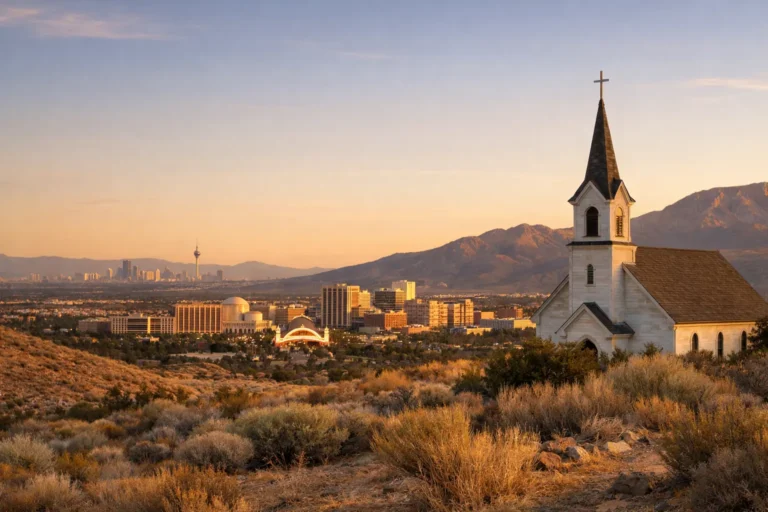
Nevada’s final expense insurance market reflects a state shaped by sharp contrasts. The Las Vegas Valley in Clark County holds nearly three-quarters of the state’s population and continues to draw retirees from California and the Midwest, while Reno and the Carson Valley anchor a fast-growing Northern Nevada corridor that has pulled in transplants from the Bay Area. Beyond those two metros, the state stretches across vast rural counties — cattle country in Elko, mining towns along US-95, and small desert communities where the nearest funeral home can be an hour’s drive. Coverage needs, funeral costs, and access to local providers vary widely depending on where a Nevada senior lives, and this page is built to help families sort through what burial insurance looks like statewide before narrowing in on their specific county.
Funeral and Cremation Costs in Nevada
Funeral costs in Nevada track close to national medians, but the state stands out in one major way: cremation has become the default choice for the vast majority of families. Understanding both the statewide averages and how costs shift between the Las Vegas Valley, the Reno-Carson corridor, and the rural counties along US-95 and I-80 helps families decide how much burial insurance coverage actually fits their situation.
Statewide Cost Averages
Nevada’s typical funeral cost ranges from $7,000 to $12,000 for a traditional service with burial, while cremation options run significantly lower. The table below shows average costs across the most common service types.
| Service Type | Typical Cost in Nevada | What’s Included |
|---|---|---|
| Traditional full-service burial | $7,000 – $10,000+ | Basic services fee, embalming, casket, viewing, hearse, burial |
| Direct burial (no viewing) | $3,500 – $5,500 | Basic services, transportation, simple casket, burial |
| Full-service cremation (with viewing) | $5,500 – $7,400 | Viewing, ceremony, cremation, alternative container, urn |
| Direct cremation | $995 – $2,000 | Transportation, cremation, permits, return of remains |
Cemetery costs are not included in the figures above. Plots, opening and closing fees, vaults, and markers can add $2,000 to $6,000 or more in Nevada, depending on the cemetery and location.
How Nevada Compares to the National Median
The National Funeral Directors Association reports a 2023 national median of $8,300 for a funeral with casket and burial and $6,280 for a funeral with cremation, including alternative cremation casket and urn. Nevada’s traditional burial costs sit roughly in line with that national figure, while direct cremation in the state tends to run well below the national direct-cremation average. That is largely a function of market pressure: Nevada has one of the highest cremation rates in the country, with 84% of residents projected to choose cremation over traditional burial in 2025, compared to a national rate in the low 60s. High volume plus a crowded provider landscape in Clark and Washoe counties has pushed direct cremation pricing to some of the most competitive levels in the western U.S.
Regional Cost Variation Within Nevada
Where you live in Nevada has a real effect on what a funeral or cremation will cost. The three broad zones — Southern Nevada (Clark County), Northern Nevada (Washoe, Carson, Douglas, Lyon), and rural Nevada (the remaining 12 counties) — each have their own cost patterns.
| Region | Direct Cremation Average | Key Cost Drivers |
|---|---|---|
| Las Vegas metro (Clark County) | $1,485 | High provider density, competitive pricing, higher death certificate fees ($38 first copy) |
| Reno metro (Washoe County) | $1,163 | Lowest average in the state; heavy provider competition |
| Carson City / Douglas | ~$1,600 | Smaller market, fewer providers, higher per-service overhead |
| Henderson | $1,441 | Urban pricing similar to Las Vegas but slightly lower on average |
| Rural counties (Elko, Nye, Humboldt, White Pine, etc.) | $1,500 – $2,500+ | Long-distance transportation to Reno or Las Vegas facilities adds $200–$500 in mileage |
Rural Nevada families often face the hidden cost of transportation. A death in Ely, Winnemucca, or Tonopah typically means the body is transported to a crematory in Reno or Las Vegas, and that mileage — usually charged at $2 to $4 per mile — can quickly add several hundred dollars to a quote that looked affordable on paper. Some rural funeral homes partner directly with urban crematories to keep costs predictable, but families should always ask how transportation is billed before signing a contract.
State-Specific Factors That Drive Cost
Several Nevada-specific conditions shape what a family ultimately pays:
- Urban concentration. Roughly 75% of Nevadans live in Clark County and another 15% in Washoe County. That concentration has produced two highly competitive markets where direct cremation providers routinely advertise services under $1,200.
- Distance in rural Nevada. Nevada is the seventh-largest state by land area but has only 17 counties and about 3.2 million residents. Counties like Nye, Elko, and Humboldt stretch across thousands of square miles, and a death in a remote part of the county often means transportation fees that wouldn’t exist in a denser state.
- Cemetery costs in Las Vegas. Traditional cemetery plots in the Las Vegas Valley tend to run higher than in Reno or the rural counties, driven by land values and demand from retirees and long-term residents.
- Death certificate pricing. Clark County charges $38 for the first death certificate and $25 for each additional copy, while most other counties charge $25, and some rural counties charge $22 each. Most families need 3 to 6 copies, so the line item typically falls between $75 and $200.
Final expense insurance is sized around these real numbers. A Las Vegas family planning a traditional burial often needs $10,000 to $15,000 in coverage once cemetery costs are factored in, while a Reno family planning a direct cremation with a small memorial may be fully covered at $5,000 to $8,000. Rural Nevada families should budget an extra $500 or so for transportation on top of whatever service level they choose.
Final Expense Insurance Regulations in Nevada
Final expense insurance is a type of small whole life policy, and in Nevada it is regulated by the same state framework that governs all life insurance products. The regulatory picture is worth understanding before buying, because the free look windows, replacement rules, and insolvency protections are all written into state law and apply to every licensed insurer selling burial insurance in the state.
The Nevada Division of Insurance
All insurance sold in Nevada — including final expense and burial life insurance — is regulated by the Nevada Division of Insurance, a division of the state’s Department of Business and Industry. The Division licenses insurance companies and agents, reviews policy forms, investigates consumer complaints, and enforces the Nevada Insurance Code found at Title 57 of the Nevada Revised Statutes. The Division maintains offices in Carson City and Las Vegas and is led by the Commissioner of Insurance. Seniors researching burial insurance in Nevada can verify that an agent or company is properly licensed through the Division’s online lookup, and consumer complaints about misrepresentation, claim delays, or high-pressure sales can be filed directly with the Division.
Free Look Period
Nevada gives every new policyholder a window to review their policy after it arrives and cancel for a full refund if they decide the coverage is not right for them. The free look periods are written into state regulation.
| Policy Type | Free Look Period | What It Means |
|---|---|---|
| New life insurance policy | 10 days minimum | Cancel within 10 days of receiving the policy for a full refund of premiums paid |
| Replacement policy | 30 days | Extended window when you’re replacing an existing life insurance policy |
The 30-day free look on replacement policies is particularly important for seniors. Nevada Administrative Code requires the new insurer to notify the policyholder in writing that “Your new policy provides 30 days for you to decide whether you wish to keep it”. This gives buyers a full month to compare the replacement against the policy being replaced before the decision becomes final.
Replacement Rules and Consumer Protections
Nevada has detailed rules governing the replacement of existing life insurance policies, codified in NAC 686A.510 through 686A.577. When an agent proposes replacing a senior’s existing burial or final expense policy with a new one, the agent and the insurer are required to provide a formal replacement notice that warns about potential financial loss, age-related premium changes, and new contestability and suicide clause periods. The rules exist because replacement is a common source of consumer harm — seniors can end up paying more, restarting waiting periods, or losing built-up cash value without realizing it. A reputable agent will walk through the replacement notice in plain language rather than brushing past it.
Graded Death Benefit and Contestability
Most final expense policies sold in Nevada fall into one of two underwriting categories. Simplified-issue policies ask a short list of health questions and, if approved, pay the full death benefit from day one. Guaranteed-issue policies skip health questions entirely but apply a two-year graded death benefit, meaning that if the insured dies of natural causes within the first two years of the policy, the beneficiary receives a refund of premiums paid plus interest rather than the full face amount. Deaths by accident are typically covered in full from day one on both policy types. Nevada also applies a standard two-year contestability period under NRS 688A, during which the insurer can investigate and deny a claim based on material misstatements on the application. After two years, the policy becomes incontestable on those grounds.
Grace Period for Missed Premium Payments
State law at NRS 688A.060 requires a grace period of 30 days, or 1 month of not less than 30 days, during which the payment of any premium after the first may be made, during which period of grace the policy shall continue in full force. If a senior misses a premium payment on their final expense policy, the insurer cannot cancel coverage for at least 30 days, and if death occurs during the grace period, the death benefit is still paid (minus the unpaid premium).
Nevada Life and Health Insurance Guaranty Association
Nevada is one of 50 states with a life and health insurance guaranty association that protects policyholders if their insurance company becomes insolvent. The Nevada Life and Health Insurance Guaranty Association covers policies from licensed member insurers, and its protections are written into NRS Chapter 686C.
For final expense policyholders, the relevant limit is on death benefits. Under NRS 686C.210, the Association covers $300,000 in death benefits from life insurance, but not more than $100,000 in net cash for surrender and withdrawal, per insured life, per member company. Since final expense policies typically carry face amounts of $5,000 to $35,000, the guaranty association’s death benefit limit is more than sufficient to fully protect a Nevada senior’s burial insurance coverage in the rare event their insurer fails. The protection applies only to insurers licensed to sell in Nevada, which is one practical reason to confirm an insurer’s Nevada licensure before buying.
Licensing Requirement for Agents
Every agent selling final expense or funeral life insurance in Nevada must hold a life insurance producer license issued by the Division of Insurance. Licensing requires passing the Nevada life insurance exam, completing pre-license education, and maintaining continuing education credits on an ongoing basis. Independent agents and brokers can represent multiple carriers, which generally works in a senior’s favor — it allows the agent to shop across companies rather than pushing whatever product a single captive carrier happens to sell.
Funeral and Burial Laws in Nevada
State law governs every step of what happens after a death in Nevada, from the paperwork required within the first 72 hours to the rules that govern how remains can be buried, cremated, or scattered. Understanding these laws matters for final expense planning because they determine what services families will actually need to pay for — and what options are legally available when the time comes.
Death Certificate Filing
Nevada requires a death certificate to be filed quickly. Under NRS 440.490, the funeral director or person acting as undertaker is responsible for presenting a completed death certificate to the local registrar within 72 hours of the death occurring. The medical portion of the certificate must be signed by the attending physician or advanced practice registered nurse who last treated the deceased. In cases involving an unattended death, accident, or suspicious circumstances, the case is referred to the coroner or medical examiner, which can extend the timeline.
Nevada now uses an electronic death registration system, but paper death certificates are still accepted. Certified copies are required for insurance claims, bank accounts, Social Security, real estate transfers, and veteran benefits. Most families need 3 to 6 copies in the weeks following a death, and fees vary by county — Clark County charges $38 for the first copy and $25 for each additional, while most other counties charge $22 to $25 per copy.
Burial Permit Requirements
Before a body can be buried, cremated, or otherwise disposed of, a burial or removal permit must be issued. NRS 440.500 provides that if a certificate of death is properly executed and complete, the local health officer shall then issue a burial or removal permit to the funeral director. The permit must indicate the name of the cemetery, mausoleum, columbarium or other place of burial where the human remains will be interred, inurned or buried. Under NRS 440.540, a body cannot be interred more than 72 hours after death without a permit, and NRS 440.560 prohibits any interment without one.
In Clark County, burial permits are issued by the Southern Nevada Health District. In Washoe County, the Washoe County Health District handles them. Rural counties work through the Nevada Division of Public and Behavioral Health, Office of Vital Records in Carson City.
Embalming Rules
Nevada actually has stricter embalming rules than most states, though the rules cut in two directions — they require embalming in some cases and explicitly protect families from unwanted embalming in others. The Nevada Board of Health requires embalming when:
- The person died of a communicable disease (NAC 451.010)
- The body will be transported by common carrier or across state lines (NAC 451.100)
- The body will be held longer than 24 hours without refrigeration
Outside those triggers, embalming is not required. NAC 451.015 allows refrigeration as an alternative to embalming, requiring that each dead body of a human being is embalmed or refrigerated at a temperature of not more than 48 degrees Fahrenheit within 24 hours after the operator receives the human remains. And importantly, Nevada protects consumers by prohibiting a funeral home from requiring embalming within the first 72 hours after death, and even after that period, only if no family member or authorized decision-maker objects. The federal FTC Funeral Rule also prohibits a funeral home from charging for embalming without permission.
Cremation Authorization and Waiting Period
Cremation in Nevada requires written authorization from the legally authorized agent on a form meeting the requirements of NRS 451.660. There is no single “X-hour” waiting period in Nevada law, but cremation cannot occur until the death certificate has been signed and the cremation authorization has been received. In practice, this means most cremations happen 3 to 7 days after death. If the case is referred to a coroner, the timeline extends until the investigation is complete.
Nevada Revised Statutes set a strict priority order for who has authority to authorize cremation or burial. Under NRS 451.024, the order is: a person designated in a legally valid document, a person named on a military Record of Emergency Data (DD Form 93), the surviving spouse, adult children, parents, adult siblings, and additional categories after that. When multiple people share the same priority level — for example, three adult children — the funeral establishment may require a majority agreement before proceeding. This is why a simple written designation in advance can prevent delays during an already difficult time.
Home Funerals
Home funerals are legal in Nevada. Nevada does not require you to involve a licensed funeral director in making or carrying out final arrangements, and families can file the death certificate themselves, transport the body, and handle disposition without hiring a funeral home. The family must still comply with all filing and permit requirements — death certificate within 72 hours, burial or removal permit before disposition — and the medical certification must still be completed by a licensed medical provider. Nolo
Nevada also allows family cemeteries in counties with populations under 55,000, though the Division of Public and Behavioral Health must be notified before the first burial takes place (NRS 451.067). This is a practical option in rural Nevada counties where private ranch and farm land is common.
Burial at Sea and Scattering Ashes
Nevada is landlocked, so traditional burial at sea from the state’s coastline is not an option, but Nevada law does permit scattering of cremated remains in several settings. Under NRS 451.700, ashes can be scattered on private property with the owner’s written consent, in public waterways, or in designated cemetery scattering gardens. Lake Tahoe, Lake Mead, and the state’s rivers are all legally available for scattering, though land management rules apply in national recreation areas and national parks. At Lake Mead National Recreation Area, scattering is allowed without a permit as long as ashes are pulverized and scattered at least 100 yards from roads, trails, or the water.
Green Burial and Alternative Disposition
Green burial is legal in Nevada. Eastside Memorial Park in Minden is the only cemetery in the State of Nevada certified by the Green Burial Council as a Natural Burial Ground. Green burial skips embalming, uses biodegradable shrouds or caskets, and avoids concrete vaults. A number of conventional Nevada cemeteries will accommodate greener practices in specific sections on request, even when they are not formally certified.
Nevada has also legalized two newer forms of disposition that reduce environmental impact. Alkaline hydrolysis — sometimes called water cremation or aquamation — was explicitly authorized in 2017 and is regulated as a form of cremation. Natural organic reduction, the process sometimes called human composting or terramation, was legalized in 2023, and at least one provider now operates a facility in Las Vegas serving families statewide.
The Nevada Funeral and Cemetery Services Board
The Nevada Funeral and Cemetery Services Board licenses and regulates funeral establishments, direct cremation facilities, crematories, embalmers, funeral directors, and funeral arrangers operating in the state. The Board investigates consumer complaints, conducts facility inspections, and enforces the standards of care set out in NRS Chapter 642 and NAC 451. Families who suspect a funeral home has overcharged them, pressured them into unnecessary services, or mishandled remains can file a complaint directly with the Board.
Regions and Major Metros in Nevada
Nevada is geographically one of the largest states in the country but one of the most concentrated in terms of population. Roughly 90% of Nevadans live in just three counties — Clark, Washoe, and Carson City — while the remaining 14 counties stretch across vast desert, mountain, and Great Basin terrain. Understanding the state’s regional structure helps families see where their local final expense market fits within the broader state picture.
Named Regions of Nevada
Nevada is commonly divided into three regions — Southern Nevada, Northern Nevada, and Rural Nevada (sometimes called the “rurals” or the “Cow Counties”). Each has a distinct identity, economy, and demographic profile.
Southern Nevada is anchored by the Las Vegas Valley in Clark County and dominated by the Mojave Desert landscape. It is the most populous region by far, home to the gaming and hospitality industry, and the fastest-growing part of the state for retirees relocating from California, Arizona, and the Midwest. Summers are hot, winters are mild, and the cost of living remains lower than most western metros.
Northern Nevada runs along the Sierra Nevada foothills and includes the Reno-Sparks metro, Carson City, and the Lake Tahoe shoreline. The region has a four-season climate, a growing tech and logistics sector driven by Tesla’s Gigafactory and Amazon distribution, and a steady influx of residents from the San Francisco Bay Area. Northern Nevada sits within the Great Basin and has a cooler, drier character than the south.
Rural Nevada covers the remaining 14 counties — the vast interior and northern tier of the state. This region includes the mining economies of Elko and Humboldt counties, the ranching country along US-50 (“the Loneliest Road in America”), and the high desert communities of White Pine, Lander, and Eureka. Populations are small, distances between towns are long, and the culture retains strong ties to mining, ranching, and buckaroo traditions.
Counties Grouped by Region
| Region | Counties |
|---|---|
| Southern Nevada | Clark, Lincoln, Nye, Esmeralda |
| Northern Nevada | Washoe, Carson City, Douglas, Lyon, Storey, Churchill, Mineral |
| Rural / Eastern & Northern Interior | Elko, Humboldt, Pershing, Lander, Eureka, White Pine |
Nye, Lincoln, and Esmeralda are sometimes grouped with Rural Nevada rather than Southern Nevada depending on the source, since their populations and economies have more in common with the rural counties than with Las Vegas. Pahrump in southern Nye County, however, has effectively become a bedroom community of the Las Vegas Valley and is often treated as part of the Southern Nevada market for final expense purposes.
Top Metros by Population
Nevada’s population is concentrated in a handful of cities and unincorporated communities. The figures below reflect U.S. Census Bureau estimates for 2024.
| Metro / City | Population | County | Notes |
|---|---|---|---|
| Las Vegas | 678,920 | Clark | Largest city in the state |
| Henderson | 350,040 | Clark | Second-largest city; popular retirement destination |
| North Las Vegas | 294,030 | Clark | Third-largest; fast-growing |
| Reno | 273,212 | Washoe | Anchor of Northern Nevada |
| Enterprise | 240,464 | Clark | Unincorporated community south of Las Vegas |
| Spring Valley | ~220,000 | Clark | Unincorporated; Las Vegas Valley |
| Sunrise Manor | ~205,000 | Clark | Unincorporated; east Las Vegas Valley |
| Paradise | ~195,000 | Clark | Unincorporated; home to the Las Vegas Strip |
| Sparks | ~109,000 | Washoe | Reno’s sister city |
| Carson City | 58,036 | Carson City | State capital; independent consolidated city-county |
County Clusters for the Major Metros
The two major metropolitan areas in Nevada each span multiple counties and incorporated and unincorporated communities.
Las Vegas Metropolitan Area (Las Vegas-Henderson-Paradise MSA) sits entirely within Clark County and accounts for roughly 2.34 million residents — more than two-thirds of Nevada’s population. The metro includes the cities of Las Vegas, Henderson, North Las Vegas, and Boulder City, plus the large unincorporated communities of Paradise, Spring Valley, Enterprise, Sunrise Manor, and Summerlin South. Pahrump in Nye County is effectively part of the extended Las Vegas commuter zone.
Reno-Sparks Metropolitan Area (Reno MSA) includes Washoe County and Storey County, with a combined population of roughly 525,000. The metro is anchored by Reno and Sparks and extends into the Tahoe Reno Industrial Center and the eastern edge of Douglas County. Carson City, while a separate metropolitan statistical area, is often grouped economically with Reno-Sparks given the 30-minute drive between them.
Carson City Metropolitan Area is a small independent MSA consisting solely of Carson City. The surrounding Carson Valley, in Douglas County, functions economically as part of the same market.
Demographic Patterns Relevant to Final Expense Insurance
Several statewide demographic patterns shape the burial insurance market in Nevada.
Retiree migration is concentrated in Southern Nevada. Clark County, particularly Henderson and the Summerlin and Sun City communities, has been a major destination for retirees leaving California. Nye County (Pahrump) and Mohave County, Arizona just across the border are both part of the broader retiree belt. This means Southern Nevada has a disproportionate share of residents in the 65–80 age range that drives final expense demand.
Northern Nevada is aging quickly. Washoe and Douglas counties have both seen steady growth in their senior populations as Bay Area retirees and remote workers relocate for lower cost of living and proximity to Tahoe. Carson Valley communities like Minden and Gardnerville have notable concentrations of retirees.
Military retirees cluster around Nellis AFB and Fallon NAS. Nellis Air Force Base in the Las Vegas Valley and Naval Air Station Fallon in Churchill County both contribute to pockets of military retiree populations who often combine VA burial benefits with final expense policies to cover the gap between what the VA provides and what a full service actually costs.
Rural Nevada has an older average age. The 14 rural counties generally show older median ages, lower incomes, and longer distances to funeral services than the two metros. Counties like Esmeralda, Lander, and Eureka have populations under 10,000, and final expense coverage in these areas needs to account for the transportation costs discussed earlier.
Nevada’s overall population is younger than the national average, driven primarily by Clark County’s growth, but the senior population is growing in absolute terms faster than many states. Clark County will absorb most of the state’s population growth, adding over 550,000 residents by 2043, which means the demand for final expense coverage in the Las Vegas Valley will continue to rise even as younger in-migrants arrive. NCHStats
Counties We Serve in Nevada
The directory below lists every county in Nevada. Each county has its own local final expense market — different cost averages, different funeral home density, different transportation considerations, and different senior demographic patterns. Click through to any county page for detailed cost data, local provider information, and coverage guidance specific to that area.
- Carson City
- Churchill County
- Clark County
- Douglas County
- Elko County
- Esmeralda County
- Eureka County
- Humboldt County
- Lander County
- Lincoln County
- Lyon County
- Mineral County
- Nye County
- Pershing County
- Storey County
- Washoe County
- White Pine County
Nevada has 17 counties: Carson City, Churchill, Clark, Douglas, Elko, Esmeralda, Eureka, Humboldt, Lander, Lincoln, Lyon, Mineral, Nye, Pershing, Storey, Washoe, and White Pine. Carson City is technically an independent consolidated municipality rather than a traditional county, but it functions as a county-level jurisdiction and is included in the state’s standard 17-county structure.
Frequently Asked Questions

About the Author
Dvir Mosche is an award-winning independent insurance agent and the founder of Palmetto Mutual, a trusted insurance brokerage specializing in Final Expense Life Insurance. Since entering the industry in 2017, he has been recognized multiple times as a top agent for his dedication to educating and assisting seniors in finding the proper coverage. His mission is to simplify the process, provide honest and personalized guidance, and ensure that every client gets coverage they can depend on for life.


