
Home > Oklahoma
Final Expense Insurance in Oklahoma — A Statewide Guide for Seniors Planning Ahead
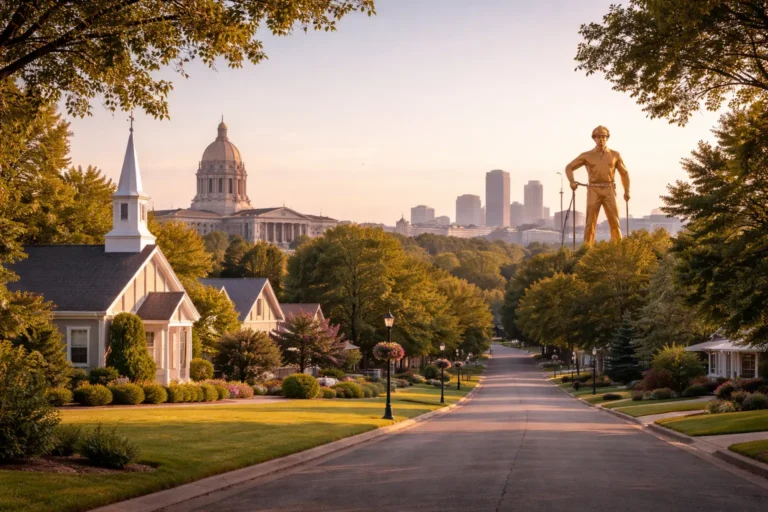
Oklahoma stretches from the wheat fields and wind farms of the Panhandle through the Oklahoma City and Tulsa metros to the pine-covered hills of Little Dixie in the southeast, and final expense insurance planning looks different in each corner of the state. Oklahoma is home to 39 federally recognized tribal nations, a large rural senior population spread across 77 counties, and retirement communities clustered around Lake Texoma, Grand Lake, and the Arbuckle region. This guide walks through statewide funeral costs, Oklahoma insurance regulations, and burial laws that shape how seniors across the Sooner State approach burial insurance decisions.
Funeral and Cremation Costs in Oklahoma
Funeral and cremation costs in Oklahoma vary significantly by region, service type, and provider. Statewide averages fall below the national medians published by the National Funeral Directors Association, but urban-rural cost patterns and Little Dixie’s distance from major metros create meaningful price differences across the state. The figures below give seniors planning final expense insurance coverage a realistic picture of what services actually cost in Oklahoma.
Statewide Funeral and Cremation Cost Averages
| Service Type | Oklahoma Average | National Median (NFDA) |
|---|---|---|
| Traditional burial with viewing | $7,000–$10,000 | $8,300 (or $9,995 with vault) |
| Full-service cremation funeral | $5,662 | $6,280 |
| Direct cremation (no service) | $1,050–$3,000 | $2,202 |
| Cremation with memorial service | $2,000–$5,500 | $3,500–$5,000 |
| Immediate burial (no viewing) | $3,200–$5,500 | $5,138 |
The average traditional funeral in Oklahoma generally ranges from $6,000 to $9,000, including services, casket, and burial. Cemetery plot fees, grave markers, and opening-and-closing fees add $1,500 to $4,000 on top of funeral home charges and are not included in the figures above.
Regional Cost Variation Within Oklahoma
Oklahoma’s major metros and rural regions show a real pricing split, though the direction of the gap depends on which service you’re comparing. In larger cities like Oklahoma City and Tulsa, direct cremation tends to be more expensive, ranging from $1,500 to $3,500, while in smaller towns or rural areas such as Norman or Lawton, direct cremation costs may start around $1,000. Full-service funerals with viewing follow the opposite pattern — urban funeral homes often charge more for traditional services due to higher facility overhead, while rural funeral homes run leaner packages.
- Oklahoma City metro: Traditional funerals typically land in the $7,500–$10,000 range. Direct cremation averages $1,500–$2,500 with a wide spread between discount providers and full-service funeral homes.
- Tulsa metro: Pricing closely mirrors Oklahoma City. Full-service cremation funerals commonly run $3,500–$5,000 at established providers, and traditional burials reach the upper end of the state range.
- Lawton and southwest Oklahoma: Rural funeral homes near Fort Sill tend to offer lower base prices, but military-related transport and honors coordination can add cost.
- Little Dixie (McCurtain, Choctaw, Pushmataha, LeFlore counties): Distance from regional suppliers and smaller funeral home volumes mean direct cremation can start near $1,000 but transport and casket options are more limited.
- Panhandle (Cimarron, Texas, Beaver counties): The most isolated region in the state. Transport fees to crematories in larger metros add meaningfully to final bills.
- Green Country and northeast Oklahoma: Tribal community customs and traditional burial preferences keep burial rates higher than the state average in several counties.
How Oklahoma Compares to National Averages
Oklahoma sits below the national median on most service categories. According to the National Funeral Directors Association, the median cost of a funeral with viewing and burial is approximately $8,300, while a funeral with cremation has a median cost of around $6,280 as of 2025. Oklahoma’s full-service cremation average of $5,662 runs roughly 10% below the national figure, and rural direct cremation pricing in the state is among the lowest in the country. Lower cost of living, strong competition among independent funeral homes in the Oklahoma City and Tulsa metros, and a large network of smaller rural providers all push prices down relative to coastal states.
What Drives Funeral Costs in Oklahoma
Several state-specific factors shape what seniors and their families actually pay for final arrangements:
- Medical examiner cremation permit fee. Oklahoma requires a $200 cremation permit issued through the Office of the Chief Medical Examiner before any cremation can be performed. This fee is built into every cremation package in the state.
- Mandatory 48-hour waiting period. There is a mandatory 48-hour waiting period between the time of death and a cremation being carried out, which affects how funeral homes schedule refrigeration and staffing.
- Rural transport distances. Moving a loved one from a Panhandle county or a remote Little Dixie community to the nearest crematory can add several hundred dollars in mileage charges.
- Cemetery costs. Plot prices in historic Oklahoma City, Tulsa, and Guthrie cemeteries run significantly higher than rural church and family cemeteries, which often charge $500–$1,500 for a plot versus $2,000–$5,000 in urban areas.
- Tribal and church traditions. Many Oklahoma communities still lean toward traditional burial with visitation, which keeps full-service funeral costs relevant even as cremation rises nationally.
- Cremation rate. Oklahoma’s cremation rate sits below the national average of 63.4% in 2025, meaning burial remains the more common choice in many counties and burial-related costs still dominate final expense planning for a large share of Oklahoma families.
Burial insurance coverage in the $10,000 to $15,000 range covers a direct cremation or cremation with memorial service comfortably across Oklahoma. Coverage of $15,000 to $25,000 is the more common range for seniors planning a traditional burial with viewing in Oklahoma City, Tulsa, or any Oklahoma community where full-service funerals remain the cultural norm.
Final Expense Insurance Regulations in Oklahoma
Final expense insurance in Oklahoma is regulated at the state level under Title 36 of the Oklahoma Statutes, with the Oklahoma Insurance Department (OID) overseeing every licensed carrier and agent selling burial insurance to Sooner State residents. The state provides meaningful consumer protections for seniors purchasing small whole life policies, including a free look window, a long grace period, and insolvency protection through the state guaranty association. Understanding these rules helps Oklahoma seniors make confident decisions when buying funeral life insurance coverage.
Oklahoma Insurance Department
The Oklahoma Insurance Department is the regulatory agency responsible for licensing insurers and agents, enforcing the state insurance code, and handling consumer complaints. The department is led by the Insurance Commissioner, an elected constitutional officer, and is headquartered in Oklahoma City. Seniors who have questions about a policy, an agent, or a claim can contact the OID Consumer Assistance Division at 800-522-0071 (toll free in Oklahoma) or 405-521-2828. The department’s offices are located at Five Corporate Plaza, 3625 NW 56th Street, Suite 100, Oklahoma City, OK 73112.
Free Look Period
Oklahoma policyholders have a free look window during which a newly issued life insurance policy can be returned for a full premium refund. Oklahoma provides a 10-day free look period, during which new policyholders can review their contract. If unsatisfied, they can cancel the policy within this window for a full refund of premiums paid. Many final expense carriers voluntarily extend this to 30 days for senior buyers, and replacement policies generally carry a 30-day window under separate replacement rules. The free look clock starts the day the policy is delivered to the policyholder, not the application date.
Grace Period
If a senior misses a monthly premium payment on a burial insurance policy, Oklahoma law protects the coverage for a full month. Oklahoma provides a 31-day grace period. During the grace period a client can always make a payment to the insurance company and restore the policy in good standing. If the insured passes during the grace period, the death benefit still pays out — the carrier simply deducts the unpaid premium from the payout. This is a meaningful protection for fixed-income seniors whose Social Security deposit timing may occasionally miss a draft date.
Two-Year Contestability and Graded Death Benefit Rules
Oklahoma follows the standard two-year contestability period on life insurance contracts. Insurers can deny claims within the first two years if the policyholder provided false information on their application. However, once this contestability period expires, the insurer must honor claims, even if misstatements are later discovered. This matters specifically for final expense insurance because many carriers sell graded death benefit policies to seniors with health conditions that prevent them from qualifying for immediate coverage. Graded policies typically return premiums plus interest (often 10%) if death occurs from natural causes within the first two policy years, then pay the full death benefit afterward. Accidental death is usually covered in full from day one. Oklahoma does not impose unique graded benefit rules beyond the general two-year contestability standard in Title 36.
Replacement Regulation
Oklahoma has specific consumer protections around replacing an existing life insurance policy with a new one. Under the Life Insurance and Annuity Policyholders Protection Act (Sections 4031 et seq.), agents proposing a replacement must provide the applicant with written notice, a formal replacement statement, and a set of defined terms explaining how replacement affects their existing coverage. The definitions of incontestable clause and suicide clause shall be in 12-point type to ensure the senior clearly understands what protections reset when a policy is replaced. Replacement policies also trigger an extended free look period. If an Oklahoma senior already owns burial or funeral life insurance and another agent suggests replacing it, the senior has the right to a clear written comparison before signing.
Oklahoma Life and Health Insurance Guaranty Association
Every carrier selling final expense insurance in Oklahoma is required to be a member of the state guaranty association, which protects policyholders if an insurer becomes insolvent. The Oklahoma Life & Health Insurance Guaranty Association is a statutory entity created in 1981 when the Oklahoma legislature enacted the Oklahoma Guaranty Association Act. The association steps in if a member carrier fails. The Oklahoma Life and Health Insurance Guaranty Association will cover up to $300,000 in death benefits and up to $100,000 in cash value. For typical final expense coverage of $5,000 to $35,000, these limits well exceed any realistic policy, so burial insurance buyers in Oklahoma are fully protected within the association’s scope.
Consumer Protections for Oklahoma Seniors
Several additional state rules protect seniors buying final expense insurance:
- Prompt claim payment. Life insurance companies in Oklahoma must process and pay claims within 30 days of receiving all required documentation. Beneficiaries who face delays can file a complaint with OID.
- Suicide clause. Oklahoma contracts include a two-year suicide clause. If the insured dies by suicide within the first two policy years, the carrier refunds premiums paid rather than paying the full death benefit.
- Agent licensing. Every agent selling burial insurance in Oklahoma must hold an active life and health producer license issued by the OID and complete continuing education every two years.
- Sales material rules. Life insurance illustrations must follow the Life Insurance Illustrations Regulation, which requires clear labeling, guaranteed-versus-non-guaranteed element disclosure, and plain language throughout.
- Funeral home beneficiary rule. Oklahoma allows a funeral home to be named as the beneficiary of a life insurance product for the purpose of funding prepaid funeral benefits, though most consumer advocates recommend naming a family member and letting them direct funds to the funeral home at the time of need for greater control.
- Complaint process. Seniors who believe an agent or carrier has acted improperly can file a formal complaint with the OID Consumer Assistance Division, which has statutory authority to investigate and penalize violations under 36 O.S. § 1204.
These regulations apply equally whether a senior buys final expense insurance in Oklahoma City, Tulsa, Lawton, or any rural county across the state. Every licensed carrier in Oklahoma operates under the same consumer protection framework.
Funeral and Burial Laws in Oklahoma
Oklahoma law governs every step of the funeral, burial, and cremation process, from death certificate filing through final disposition. These rules are set primarily by the Oklahoma State Department of Health, the Office of the Chief Medical Examiner, and the Oklahoma Funeral Board. Understanding these laws helps seniors and their families make informed decisions when buying burial insurance and planning final arrangements, since what’s legal in Oklahoma directly shapes what final expense coverage needs to fund.
Death Certificate Filing Process and Timeline
Oklahoma recently updated its death certificate filing rules, giving families more breathing room after a loss. In Oklahoma, a death certificate must be filed with the local registrar within three days and before final disposition of the body. Effective November 1, 2024, the filing period for death certificates increases to 10 days. The funeral director typically signs and files the certificate on behalf of the family. The attending physician who was in charge of the decedent’s care for the illness or condition that resulted in death has 48 hours after the death to complete the medical certification portion of the death certificate (including cause of death). Effective November 1, 2024, the filing period for the medical certification increases to five days.
Certified copies of the death certificate are required to settle the estate, file life insurance claims, and close accounts. Certified copies of the death certificate, required for legal purposes such as settling estates and filing insurance claims, cost $20 each. Families typically request 10 or more copies since each institution handling an insurance claim, bank account, or property transfer requires its own original.
Burial and Transit Permit Requirements
Oklahoma does not require a state-issued permit for routine in-state burials, but does for cross-state transport. Unlike many other states, you don’t need a special permit to move a body in Oklahoma. You do, however, need a burial-transit permit from the medical examiner if you wish to move the body out of the state. (Okla. Stat. tit. 63, § 6-101 (2024).) The burial-transit permit is issued by the local registrar once the death certificate is filed. This matters for Oklahoma families with loved ones who winter in Texas, Arizona, or Florida and pass away out of state — the receiving funeral home handles transit paperwork through its local medical examiner.
Embalming Rules
Oklahoma does not require embalming in most cases. Oklahoma regulations state that a body must be either embalmed or refrigerated if the burial or cremation doesn’t occur within 24 hours. No public viewing is allowed 24 hours after death unless the body is embalmed. (Okla. Admin. Code § 235:10-11-1(a)(13) (2024).) In practice, this means:
- Direct cremation within 24 hours does not require embalming.
- Immediate burial within 24 hours does not require embalming.
- Any delay past 24 hours requires either embalming or refrigeration.
- Public viewing at any point past 24 hours requires embalming.
- Out-of-state transport by common carrier generally requires embalming, as most airlines require it.
This flexibility keeps direct cremation and immediate burial costs low, which matters for seniors choosing coverage amounts. A $10,000 burial insurance policy easily covers a non-embalmed direct cremation or immediate burial in Oklahoma.
Cremation Authorization Rules
Cremation in Oklahoma requires more paperwork than burial. In order for a cremation to be conducted, a Cremation Authorization must be signed by the next of kin. Then, a cremation permit is obtained from the State Medical Examiner before the deceased can be cremated. There is a mandatory 48-hour waiting period between the time of death and a cremation being carried out. The Medical Examiner’s cremation permit fee is $200 and is typically passed through on every cremation package.
Next-of-kin succession for cremation authorization follows Title 21, Section 1158 of the Oklahoma Statutes, giving authority to the surviving spouse first, then adult children, then parents, then siblings. Oklahoma also allows a person to direct their own final disposition in advance through a sworn affidavit under Title 21, Oklahoma Statutes, Section 1151, which overrides next-of-kin authority. This is a useful tool for seniors who want to make sure their burial or cremation wishes are honored without family disagreement.
Home Funeral Legality
Oklahoma allows families to care for their own deceased loved ones at home. Yes, you can conduct home death care in Oklahoma. According to Oklahoma statute [59 O.S. §396.19], the family must ensure that a death certificate is filed at the health department. Home funerals are legal statewide, though they remain uncommon compared to traditional funeral home services. Families choosing this route handle body preparation, filing, and transport themselves, which can significantly reduce costs but requires careful coordination with the state department of health.
Home Burial and Private Land Burial
Oklahoma does not prohibit burial on private land outside city limits, but local rules apply. There are no state laws in Oklahoma that prohibit home burial, but local governments might have rules governing private burials. Before conducting a backyard burial or establishing a family cemetery, check with the town or county clerk to see if there are any zoning rules you must follow. The general guidance for burial is for it to be at least 150 feet from any water supply and 25 feet from any power lines or boundaries. Burial within city limits is typically prohibited by local zoning. Rural families in western Oklahoma, the Panhandle, and Little Dixie sometimes bury on family land, but should file a map of the burial site with the property deed so future owners can identify it.
Green Burial Legality
Green burial is fully legal in Oklahoma, though the number of dedicated natural burial grounds remains limited. Notable green burial options in the state include:
- Green Tree Burial Grounds in Mead (Bryan County) — one of Oklahoma’s earliest dedicated natural burial grounds, offering hand-dug graves and biodegradable shrouds or caskets on a 10-acre woodland.
- Green Haven Cemetery west of Stillwater — a dedicated natural burial ground with no vaults, embalming, or heavy caskets, maintained as native meadow.
- Woodland Memorial Park Cemetery in Sand Springs — a hybrid cemetery with a green burial section.
- Ingram, Smith & Turner Mortuary in Yukon — a Green Burial Council-aligned funeral home offering formaldehyde-free embalming and natural burial coordination.
Aquamation (Alkaline Hydrolysis)
Oklahoma legally recognizes aquamation as a form of final disposition. In 2021, Oklahoma recognized aquamation as an acceptable form of disposition when it added a definition of “alkaline hydrolysis” to its Funeral Services Licensing Act. Availability is still limited — only a handful of Oklahoma facilities currently offer the service, meaning families may need to work with a funeral home in Oklahoma City or Tulsa that partners with a licensed aquamation provider. Aquamation costs in Oklahoma generally run $2,000 to $4,000.
Human Composting
Natural organic reduction (human composting) is not yet legal in Oklahoma. Senate Bill 1637 was introduced in February 2024 to legalize the practice but has not been enacted. Oklahoma families interested in this option currently need to arrange transport to a state where it is legal, such as Washington or Colorado.
Oklahoma Funeral Board
The Oklahoma Funeral Board (officially the State Board of Embalmers and Funeral Directors) regulates funeral directors, embalmers, funeral establishments, and crematories statewide. The Board is headquartered at 4545 N. Lincoln Blvd, Suite 175, Oklahoma City, OK 73105. Its mission is to protect the public through licensing and enforcement of the Funeral Services Licensing Act. The maximum penalty the Board may impose is a $10,000 fine and revocation of license. The Board does not have the authority to award damages, settle contractual disputes, determine legal next of kin, or offer legal advice.
Notably, the Board does not regulate cemeteries, monument companies, or vault companies — those fall outside its jurisdiction. Complaints about cemeteries go to other state agencies, and complaints about prepaid funeral contracts go to the Oklahoma Insurance Department’s Prepaid Funeral Benefits Division. Complaints about a licensed funeral home should first be directed to the home itself; if unresolved, a written complaint can be filed with the Oklahoma Funeral Board.
These state laws shape practical decisions for Oklahoma seniors planning their final expenses. Funeral insurance coverage of $10,000 to $15,000 handles a direct cremation, immediate burial, or aquamation in Oklahoma with room to spare. Coverage of $15,000 to $25,000 covers a traditional funeral with embalming, viewing, and burial — the arrangement still preferred by many Oklahoma families, especially across rural counties and in faith communities where open-casket services remain the cultural standard.
Regions and Major Metros in Oklahoma
Oklahoma’s 77 counties span six culturally distinct regions, from the open prairies of the Panhandle to the wooded hills of Little Dixie. Understanding how Oklahoma is divided regionally helps seniors locate their county, identify the nearest metro, and understand the local cost patterns that shape final expense insurance planning. Tulsa and Oklahoma City together anchor more than half the state’s population, while rural regions stretch across the other two-thirds of the state’s land area.
Named Regions of Oklahoma
Oklahoma is traditionally divided into six travel and cultural regions, each with its own identity and economic character:
- Green Country (Northeast Oklahoma) — Rolling hills, the Ozark foothills, and more lakes than any other part of the state. Anchored by Tulsa. A tourism designation that is an 18-county region including Pawnee, Osage, Washington, Nowata, Craig, Ottawa, Delaware, Mayes, Rogers, Creek, Tulsa, Wagoner, Cherokee, Adair, Sequoyah, Muskogee, Okmulgee, and McIntosh counties.
- Frontier Country (Central Oklahoma) — The Oklahoma City metro and surrounding counties. Rolling prairies, Cross Timbers woodlands, and the state’s government and commercial core.
- Choctaw Country / Little Dixie (Southeast Oklahoma) — The Kiamichi and Ouachita mountains, pine forests, and strong Southern cultural influence. “Little Dixie” denotes southeastern Oklahoma and its close social, cultural, and above all, political connections to the American South. Home to the Choctaw Nation’s capital in Durant.
- Chickasaw Country (South Central Oklahoma) — The Arbuckle Mountains, Lake Texoma, and retirement communities near the Red River. Heart of the Chickasaw Nation.
- Great Plains Country (Southwest Oklahoma) — Rugged Wichita Mountains, military culture around Fort Sill, and the Red Earth prairie country. Anchored by Lawton.
- Red Carpet Country (Northwest Oklahoma and Panhandle) — Wheat fields, wind farms, mesas, and the state’s highest elevation at Black Mesa. The state’s highest elevation is within the Oklahoma Panhandle. Oklahoma’s portion of Black Mesa is at an altitude of 4,973 feet above sea level.
Oklahoma Counties Grouped by Region
The table below groups all 77 Oklahoma counties by the state’s six tourism and cultural regions. Regional boundaries can vary slightly between sources; this grouping follows the Oklahoma Department of Tourism’s travel destination regions.
| Region | Counties |
|---|---|
| Green Country (Northeast) | Adair, Cherokee, Craig, Creek, Delaware, Mayes, McIntosh, Muskogee, Nowata, Okmulgee, Osage, Ottawa, Pawnee, Rogers, Sequoyah, Tulsa, Wagoner, Washington |
| Frontier Country (Central) | Canadian, Cleveland, Hughes, Lincoln, Logan, McClain, Oklahoma, Pottawatomie, Seminole |
| Choctaw Country / Little Dixie (Southeast) | Atoka, Bryan, Choctaw, Coal, Haskell, Latimer, LeFlore, McCurtain, Pittsburg, Pushmataha |
| Chickasaw Country (South Central) | Carter, Garvin, Grady, Jefferson, Johnston, Love, Marshall, Murray, Pontotoc, Stephens |
| Great Plains Country (Southwest) | Beckham, Caddo, Comanche, Cotton, Custer, Greer, Harmon, Jackson, Kiowa, Roger Mills, Tillman, Washita |
| Red Carpet Country (Northwest and Panhandle) | Alfalfa, Beaver, Blaine, Cimarron, Dewey, Ellis, Garfield, Grant, Harper, Kay, Kingfisher, Major, Noble, Payne, Texas, Woods, Woodward |
Top Metros in Oklahoma
Oklahoma has two large metropolitan areas that together hold more than 60% of the state’s population, plus several smaller metros that serve as regional hubs for their surrounding counties.
| Metro | 2024 Population | Counties Included |
|---|---|---|
| Oklahoma City MSA | ~1,498,000 | Canadian, Cleveland, Grady, Lincoln, Logan, McClain, Oklahoma |
| Tulsa MSA | ~1,060,000 | Creek, Okmulgee, Osage, Pawnee, Rogers, Tulsa, Wagoner |
| Lawton MSA | ~125,000 | Comanche, Cotton |
| Enid MSA | ~62,000 | Garfield |
| Stillwater MSA | ~82,000 | Payne |
| Shawnee Micropolitan | ~73,000 | Pottawatomie |
| Bartlesville Micropolitan | ~55,000 | Washington |
The Oklahoma City metropolitan area, being the state’s principal and largest metropolitan statistical area, had a population of 1,425,695 at the 2020 census and has continued growing. The Tulsa metropolitan area had a population of 1,059,803 according to the 2024 U.S. census estimates.
Major Cities in Oklahoma
The state’s largest cities are concentrated in the Oklahoma City and Tulsa metros. The most populous cities in Oklahoma are Oklahoma City with 697,125, Tulsa at 413,794, Norman with 129,672, Broken Arrow at 118,180, and Edmond with 96,825. Lawton (approximately 94,000), Moore (approximately 63,000), Midwest City (approximately 58,000), Stillwater (approximately 49,000), and Enid (approximately 50,000) round out the top 10.
Broken Arrow, Owasso, Bixby, Jenks, and Sand Springs anchor the inner Tulsa suburbs. Edmond, Moore, Norman, Midwest City, Yukon, and Mustang form the Oklahoma City suburban ring. Outside these two metros, most Oklahoma counties are rural — the state has many counties with populations under 10,000.
State-Level Demographic Patterns Relevant to Final Expense Planning
Oklahoma’s demographic profile shapes how burial insurance planning plays out across the state:
- Senior population. Roughly 17% of Oklahomans are 65 or older, close to the national average. The share rises in rural counties across the Panhandle, southwest Oklahoma, and Little Dixie, where younger residents have migrated to the metros.
- Strong military retiree presence. Fort Sill in Lawton, Tinker Air Force Base in Midwest City, Vance Air Force Base in Enid, and Altus Air Force Base all anchor communities with large military retiree populations. These seniors often combine VA burial benefits with final expense insurance coverage.
- Retirement destinations. Lake Texoma (Marshall and Bryan counties), Grand Lake o’ the Cherokees (Delaware and Mayes counties), the Arbuckle Mountains (Murray and Carter counties), and Eufaula Lake (McIntosh and Pittsburg counties) all draw retirees from Oklahoma, Texas, and the surrounding region.
- Native American population. Oklahoma is home to 39 Native American tribal governments and has one of the highest Native American population shares in the country. Many Oklahoma seniors navigate final arrangements with tribal cultural considerations alongside state law.
- Rural vs. urban split. About 60% of Oklahomans live in the OKC or Tulsa metro areas. The remaining 40% are spread across 70+ counties, many with populations under 20,000. This creates real differences in funeral home access, cost, and service options between metro and rural seniors.
- Cremation-vs.-burial patterns. Oklahoma’s cremation rate sits below the national average, with traditional burial remaining the cultural norm across much of Little Dixie, Great Plains Country, and rural Red Carpet Country. Green Country and Frontier Country show cremation rates closer to the national average.
These regional and demographic patterns shape how much burial life insurance coverage makes sense for a senior in a given part of Oklahoma. A retiree in Oklahoma City or Tulsa planning a traditional funeral typically targets $15,000-$25,000 in coverage. A senior in the Panhandle or Little Dixie planning a direct cremation or immediate burial may need only $10,000-$12,000 to fully cover final costs.
Counties We Serve in Oklahoma
Palmetto Mutual helps seniors and their families plan for final expenses in every Oklahoma county. Whether you live in the Oklahoma City suburbs, a Tulsa neighborhood, a Little Dixie small town, or a rural community in the Panhandle, a dedicated county page covers funeral costs, local cemeteries, veteran burial resources, and county-specific details that shape your final expense insurance decisions. Select your county below to see local information and request a quote.
- Adair County
- Alfalfa County
- Atoka County
- Beaver County
- Beckham County
- Blaine County
- Bryan County
- Caddo County
- Canadian County
- Carter County
- Cherokee County
- Choctaw County
- Cimarron County
- Cleveland County
- Coal County
- Comanche County
- Cotton County
- Craig County
- Creek County
- Custer County
- Delaware County
- Dewey County
- Ellis County
- Garfield County
- Garvin County
- Grady County
- Grant County
- Greer County
- Harmon County
- Harper County
- Haskell County
- Hughes County
- Jackson County
- Jefferson County
- Johnston County
- Kay County
- Kingfisher County
- Kiowa County
- Latimer County
- Le Flore County
- Lincoln County
- Logan County
- Love County
- Major County
- Marshall County
- Mayes County
- McClain County
- McCurtain County
- McIntosh County
- Murray County
- Muskogee County
- Noble County
- Nowata County
- Okfuskee County
- Oklahoma County
- Okmulgee County
- Osage County
- Ottawa County
- Pawnee County
- Payne County
- Pittsburg County
- Pontotoc County
- Pottawatomie County
- Pushmataha County
- Roger Mills County
- Rogers County
- Seminole County
- Sequoyah County
- Stephens County
- Texas County
- Tillman County
- Tulsa County
- Wagoner County
- Washington County
- Washita County
- Woods County
- Woodward County
Frequently Asked Questions

About the Author
Dvir Mosche is an award-winning independent insurance agent and the founder of Palmetto Mutual, a trusted insurance brokerage specializing in Final Expense Life Insurance. Since entering the industry in 2017, he has been recognized multiple times as a top agent for his dedication to educating and assisting seniors in finding the proper coverage. His mission is to simplify the process, provide honest and personalized guidance, and ensure that every client gets coverage they can depend on for life.


