
Home > Vermont
Final Expense Insurance in Vermont — A Guide for Green Mountain State Seniors
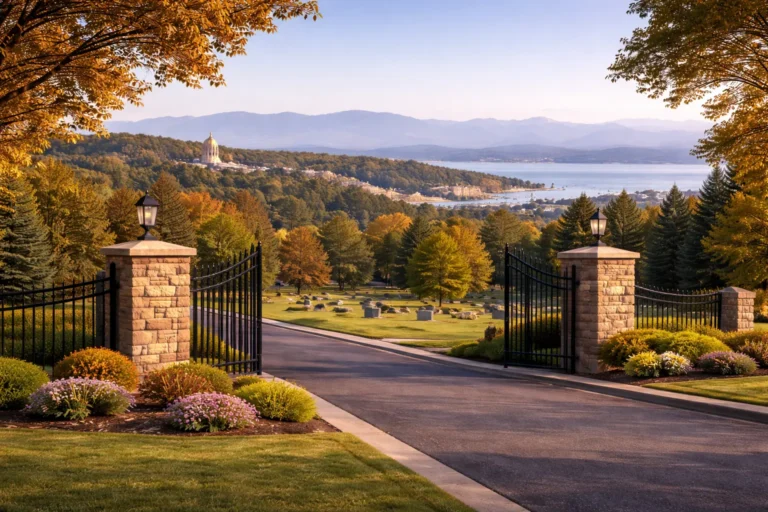
Vermont’s final expense landscape reflects the state’s rural character and aging population, with planning considerations that differ meaningfully between the Champlain Valley, the Northeast Kingdom, and the ski country communities along the Green Mountains. The state has one of the highest median ages in the country, a strong tradition of home funerals and natural burial, and funeral costs that run noticeably above the national median in the Burlington metro while staying closer to average in rural counties. This guide walks Vermont seniors and their families through burial insurance pricing, state regulations, and funeral law so you can plan with clear information tied to where you actually live.
Funeral and Cremation Costs in Vermont
Vermont funeral costs generally run above the national median, reflecting the Northeast region’s higher-than-average pricing and the state’s rural spread, which limits competition in many counties. Cremation is by far the more common choice here, with Vermont’s cremation rate sitting around 72% — well above the national rate of roughly 63%. The figures below are statewide averages pulled from funeral industry surveys and the NFDA; actual prices in any given county can run higher or lower than these numbers.
Statewide Average Costs
| Service Type | Average Cost in Vermont | National Median (NFDA) |
|---|---|---|
| Traditional full-service burial (with vault) | $8,500 – $9,000 | $9,995 |
| Traditional burial (no vault) | $8,300 | $8,300 |
| Full-service cremation (with viewing) | $6,000 – $6,600 | $6,280 |
| Direct cremation | $1,400 – $2,300 | $2,202 |
| Cemetery plot and opening/closing fees | $4,000 – $4,500 additional | Varies |
Sources: Funeral Consumers Alliance of Vermont price survey, NFDA 2023 General Price List Study, Funeralocity Vermont data.
Direct cremation shows the widest range in the state. The Funeral Consumers Alliance of Vermont has documented direct cremation prices running from roughly $1,065 on the low end to over $3,000 on the high end — a spread of nearly 3x for what is essentially the same service. Always confirm whether the quoted price includes the third-party crematory fee (typically $275 to $450), because some Vermont funeral homes bundle it in and others do not.
Regional Cost Variation in Vermont
Prices vary across Vermont’s regions more by population density than by named geography. Burlington and Chittenden County typically sit at the top of the range, while smaller towns in the Northeast Kingdom and rural central Vermont often price 10% to 30% below metro averages.
| Region | Typical Cost Pattern |
|---|---|
| Chittenden County / Burlington metro | Highest in the state; full-service burials in Burlington often exceed $10,000 |
| Rutland and Bennington (southwest) | Mid-range; moderate competition keeps prices closer to state average |
| Upper Valley / White River Junction | Mid-range; some cross-border pricing pressure from New Hampshire |
| Northeast Kingdom (Essex, Orleans, Caledonia) | Generally the lowest in the state, though rural distance adds transport fees |
| Central Vermont / Montpelier–Barre | Near state average; granite industry ties keep monument costs competitive |
Why Vermont Costs Run Above the National Median
Three factors drive Vermont pricing above the national median. First, the Northeast as a census region has some of the highest funeral and cremation costs in the country. Second, Vermont’s rural spread means many counties have only a handful of licensed funeral homes, which limits price competition. Third, the state’s cost of living, real estate prices in Chittenden County, and winter-related overhead (including refrigeration and heated facilities) all push operational costs upward.
These statewide figures give you a planning baseline when sizing a final expense insurance policy. Most Vermont families choose a burial insurance benefit somewhere between $10,000 and $20,000, which covers a direct cremation or basic funeral with room left for cemetery costs, a marker, and small outstanding medical or final debts.
Final Expense Insurance Regulations in Vermont
Final expense policies sold to Vermont residents are regulated at the state level, which means Vermont law sets the rules for how these policies are sold, what protections apply after purchase, and what happens if the insurer runs into financial trouble. The rules below are the ones most relevant to seniors buying burial insurance or small whole life policies in Vermont.
Who Regulates Insurance in Vermont
Vermont insurance is overseen by the Vermont Department of Financial Regulation (DFR), specifically the Insurance Division. The Insurance Division licenses every life insurance company and producer doing business in the state, reviews and approves policy forms before they can be sold, and handles consumer complaints. All life insurance laws sit in Title 8 of the Vermont Statutes, and the main administrative rules for life insurance are published in the Code of Vermont Rules, Agency 21, Sub-Agency 020.
Vermont’s 10-Day Free Look Period
Vermont requires a minimum 10-day free look period on life insurance policies. The clock starts when you receive the policy documents, not when you apply or pay the first premium. If you cancel inside those 10 days for any reason, the insurance company must refund every dollar you have paid — no fees, no penalties. This is a consumer protection you should use. Read the policy carefully when it arrives, confirm the benefit amount and premium match what the agent quoted, and check that any graded benefit or waiting period language lines up with what you understood at application.
Grace Period and Claim Payment Timelines
Vermont law sets a 30-day grace period for missed premium payments on life insurance policies. If you miss a payment, coverage stays in force for 30 days, and if you pay inside that window the policy is restored without a lapse. Insurers are also required to pay valid death claims within 45 days of receiving proof of death. Claims paid after 45 days must include accrued interest, which is Vermont’s mechanism for keeping carriers moving on legitimate claims.
Extra Protection for Seniors Age 64 and Older
Vermont has a senior-specific consumer protection that is stronger than what many states offer. Under 8 V.S.A. § 3732(d), any individual life insurance policy covering a person age 64 or older that has been in force at least one year cannot be canceled for nonpayment of premium until the insurer gives at least 21 days’ written notice of pending cancellation to both the policyholder and a designated secondary addressee. The insurer must notify you of your right to name a secondary addressee when you apply, and again every year the policy stays in force. For final expense buyers — who are almost always past age 64 — this rule creates a second set of eyes on your policy so a missed payment during illness, hospitalization, or cognitive decline doesn’t quietly terminate your coverage. Always name a trusted family member as the secondary addressee when you apply.
Replacement Rules
If you already own a life insurance policy and an agent proposes replacing it with a new one, Vermont Regulation I-2001-03 applies. The agent must present and read aloud a formal replacement notice at or before the time of application, list every existing policy being replaced, and leave a signed copy with you. The rule is designed to make sure you understand what you’re giving up — surrender charges, contestability period resetting, the two-year suicide clause resetting, and potentially worse rates based on current age and health. For seniors already holding a whole life or final expense policy, replacement is rarely in your favor. If an agent is pushing it, slow down and call the DFR Insurance Division at 802-828-3301 before you sign anything.
Guaranty Association Protection
If a life insurer licensed in Vermont becomes insolvent, the Vermont Life and Health Insurance Guaranty Association steps in. Coverage is capped at $300,000 in death benefits and $100,000 in cash surrender value per insured life. For a final expense policy with a face amount between $5,000 and $35,000, this cap sits well above any typical policy size, so your benefit is fully backstopped.
Filing a Complaint
Vermont’s DFR Insurance Division takes consumer complaints on life insurance at dfr.vermont.gov/consumers/file-complaint/insurance or by phone at 802-828-3301. If you believe a final expense policy was misrepresented, or if a claim is being delayed beyond 45 days without cause, filing a complaint is free and often resolves the issue without needing an attorney.
Funeral and Burial Laws in Vermont
Vermont funeral and burial law is shaped by two things that set the state apart: a long-standing legal right for families to care for their own dead without hiring a funeral director, and an early commitment to natural burial and other environmentally conscious disposition options. The rules below cover what Vermont actually requires — and what it doesn’t — for the most common steps after a death.
Death Certificate Filing
Under 18 V.S.A. § 5202, the licensed health care professional who last attended the deceased must complete the medical portion of the death certificate within 24 hours of the death and submit it to the Vermont Department of Health Electronic Death Registration System (EDRS). The demographic portion — personal and family information about the deceased — is usually completed by the funeral director, or by the next of kin if the family is handling arrangements directly. Certified copies of the death certificate cost $12 each through Vermont.gov. You will typically need six to ten certified copies to handle the insurance claim, the estate, Social Security, and any banking or property transfers.
Burial Transit Permit
Vermont is one of the few states that requires a Burial Transit Permit (BTP) before a body can be moved or buried. Under 18 V.S.A. § 5201, no body can be moved or finally disposed of without one. The permit is issued by the town clerk (or a designated deputy registrar) in the town where the death occurred, after the death certificate has been registered. The permit accompanies the body through transport, burial, or cremation, and must be filed back with the town clerk by the 10th day of the month following disposition.
Embalming Is Not Required
Vermont does not require embalming in any situation. Refrigeration is a fully legal alternative under state law, and families may choose direct burial or direct cremation with no embalming involved. Some funeral homes set their own policy requiring embalming for an open-casket viewing, but this is a business choice — not state law. If cost is a concern, simply decline embalming and ask for refrigeration or a closed-casket service.
Cremation Rules
Vermont requires a 24-hour waiting period between death and cremation. Before a cremation can proceed, a Vermont Medical Examiner must examine the body and sign a Cremation Certificate confirming no further investigation is needed; the fee for this review is $25. The family or authorized agent must also sign an Authorization to Cremate, and the crematory must have the certified death certificate and original burial transit permit in hand before proceeding. If the cremation will take place out of state, a Vermont Medical Examiner still needs to view the body and issue the certificate before the body is transported.
Home Funerals Are Fully Legal
Vermont gives families a broad legal right to care for their own dead. Under 18 V.S.A. § 5207, “family of the deceased, if any, or the undertaker, or person who has charge of the body” may perform every function normally handled by a funeral director — no license required as long as the family is not being paid to do so. Families can file the Preliminary Report of Death directly with Vital Records by fax, mail, or hand delivery, obtain the burial transit permit, transport the body themselves, and conduct a home vigil or funeral. This is the broadest family-directed funeral right in any New England state.
Burial on Private Property
Burial on your own land is legal in Vermont, subject to town zoning and local ordinances. If you plan a private burial, you’ll need to draw a map of the burial site’s location on the property and file it with the town clerk’s office. Some towns have additional rules, so contact the town clerk or town health officer before committing to a private burial plot. The 2015 law known as Act 24 clarified and modernized these rules, making Vermont one of the easier states for home burial.
Green Burial and Natural Organic Reduction
Vermont has been an early mover on green burial. In 2015, the legislature explicitly authorized “natural burial grounds” — cemeteries operating without vaults, using only biodegradable containers or shrouds, with unembalmed remains or remains embalmed using nontoxic fluids. The state now has 15 or more cemeteries offering green burial plots, including the Vermont Forest Cemetery in Roxbury (the state’s first fully natural burial ground), Higher Ground Conservation Burial in southern Vermont, and green sections at Green Mount Cemetery in Montpelier, Meetinghouse Hill Cemetery in Brattleboro, Hazen Westview in North Hero, and Robinson Cemetery in Calais. Vermont also legalized natural organic reduction (human composting) in 2022, though as of now there are no in-state facilities, so families choosing this option must ship remains out of state.
Scattering Ashes
Vermont has no state statute restricting where cremated remains may be scattered. Scattering on private property you own is fully legal. Scattering on public land typically requires checking local ordinances. Scattering in inland waters such as Lake Champlain falls under the federal Clean Water Act, which may require a permit for some inland water scatterings. For scattering at sea, EPA rules require the scattering occur at least three nautical miles offshore, and the event must be reported to the EPA Region 1 office in Boston within 30 days.
The Vermont Board of Funeral Service
Licensed funeral directors, funeral homes, cemeteries, and crematoriums in Vermont are regulated by the Vermont Board of Funeral Service, housed under the Office of Professional Regulation within the Vermont Secretary of State’s office. The Board handles licensing, sets professional conduct rules, and investigates complaints against death care professionals. If you run into a dispute with a funeral home — billing problems, misrepresentation of legal requirements, or a Funeral Rule violation — the Board is the right place to file a complaint. They can be reached at 802-828-1505.
Regions and Major Metros in Vermont
Vermont has 14 counties and roughly 648,000 residents, making it the second-least-populous state in the country. But the state packs real regional diversity into that small population — Lake Champlain communities on the western side, mountain towns along the Green Mountain spine, Connecticut River Valley communities on the east, and the remote Northeast Kingdom up against the Canadian border. Understanding where you sit regionally matters when planning final expenses because pricing, cemetery options, and even travel distance for family members all vary by region.
The Four Regions of Vermont
Vermont’s regional identity is built around four travel and cultural regions that follow natural geography. The Northeast Kingdom is formally defined as Caledonia, Essex, and Orleans counties. The other regional groupings are widely used in state tourism, economic development, and political geography.
| Region | Counties | Character |
|---|---|---|
| Champlain Valley | Addison, Chittenden, Franklin, Grand Isle | Vermont’s population and economic center; Lake Champlain shoreline; dairy country; most hospitals, funeral homes, and cemeteries per capita |
| Northeast Kingdom | Caledonia, Essex, Orleans | Remote, heavily forested, Canadian border; 21% of the state’s land area but only about 9% of its population; lowest cost of living in the state |
| Central Vermont | Washington, Lamoille, Orange | Green Mountain spine; state capital in Montpelier; granite industry around Barre; ski country around Stowe |
| Southern Vermont | Bennington, Rutland, Windham, Windsor | Southwest marble country (Rutland), Bennington border towns, Connecticut River Valley communities (Windham/Windsor), strong cross-border ties to Massachusetts and New Hampshire |
Top Metros in Vermont by Population
Vermont has no large cities by national standards — even Burlington, the largest, sits under 45,000 people. But the state’s metros concentrate most of the funeral homes, hospitals, hospice services, and cemetery options that final expense planning depends on.
| Metro / City | Population (2024 ACS) | County | Notes |
|---|---|---|---|
| Burlington | 44,675 | Chittenden | State’s largest city; University of Vermont Medical Center; highest funeral costs in the state |
| South Burlington | 20,756 | Chittenden | Suburban companion to Burlington; part of Burlington-South Burlington MSA |
| Colchester | 17,648 | Chittenden | Suburban Burlington metro community on Lake Champlain |
| Rutland | 15,712 | Rutland | Historic marble city; regional hub for southwestern Vermont |
| Bennington | 15,249 | Bennington | Southwest corner; strong ties to Albany, NY and western Mass. markets |
| Brattleboro | ~12,000 | Windham | Southeast Vermont hub; Connecticut River Valley |
| Essex Junction | ~11,000 | Chittenden | Burlington metro bedroom community |
Source: U.S. Census Bureau 2024 American Community Survey.
Metro Clustering
The Burlington-South Burlington Metropolitan Statistical Area — Vermont’s only federally recognized MSA — covers Chittenden, Franklin, and Grand Isle counties, with a combined population of roughly 225,000. This single metro holds about 35% of Vermont’s total population. Outside of Burlington, no other Vermont community reaches true metro status by federal definition; Rutland, Bennington, Brattleboro, Montpelier-Barre, and the White River Junction area all function as regional service hubs but remain small in absolute population.
Senior Population Patterns
Vermont has one of the oldest populations in the country. The state’s median age is approximately 43, well above the national median, and Vermonters age 65 and older make up roughly 21% of the total population — one of the highest shares in the nation. That demographic reality sits behind most of the state’s final expense planning. Several regional patterns are worth naming:
- Northeast Kingdom senior density. Caledonia, Essex, and Orleans counties have some of the highest 65+ population shares in Vermont, combined with the state’s lowest household incomes. Burial insurance demand is strong in this region precisely because pre-funding with savings is difficult.
- Retirement migration into southern Vermont. Windham, Windsor, and Bennington counties have attracted out-of-state retirees from New York, Massachusetts, and Connecticut looking for rural Vermont living at lower price points than second-home markets further north. Pre-planning rates are higher here than in the Northeast Kingdom.
- Chittenden County concentration. Roughly one in four Vermont seniors lives in Chittenden County or its immediate suburbs, where access to hospitals, hospice, and funeral services is strongest but costs run the highest.
- Rural spread. Vermont’s rural character means many seniors live 20-plus miles from the nearest funeral home or hospital, which adds transport cost to final arrangements and makes pre-planning more valuable.
These patterns explain why funeral life insurance shows up differently depending on where in Vermont you live. A Burlington senior planning for a $10,000 cremation-plus-memorial service faces a different price point than an Orleans County senior planning for a direct cremation, and both differ again from a Bennington retiree who may have inherited family cemetery plots further south. Your county page — linked in the directory below — covers pricing and funeral home options at the local level.
Counties We Serve in Vermont
Palmetto Mutual serves final expense clients in every county in Vermont. The directory below lists all 14 counties alphabetically — click any county to see local funeral home pricing, cemetery options, and burial insurance details specific to that area. Whether you’re planning in the Champlain Valley, the Northeast Kingdom, the Connecticut River Valley, or anywhere between, there’s a county page with pricing and resources tailored to where you actually live.
- Addison County
- Bennington County
- Caledonia County
- Chittenden County
- Essex County
- Franklin County
- Grand Isle County
- Lamoille County
- Orange County
- Orleans County
- Rutland County
- Washington County
- Windham County
- Windsor County
Frequently Asked Questions

About the Author
Dvir Mosche is an award-winning independent insurance agent and the founder of Palmetto Mutual, a trusted insurance brokerage specializing in Final Expense Life Insurance. Since entering the industry in 2017, he has been recognized multiple times as a top agent for his dedication to educating and assisting seniors in finding the proper coverage. His mission is to simplify the process, provide honest and personalized guidance, and ensure that every client gets coverage they can depend on for life.


