
Home > Funeral Cost > Headstone Grave Marker Cost
Average Cost of a Headstone or Grave Marker
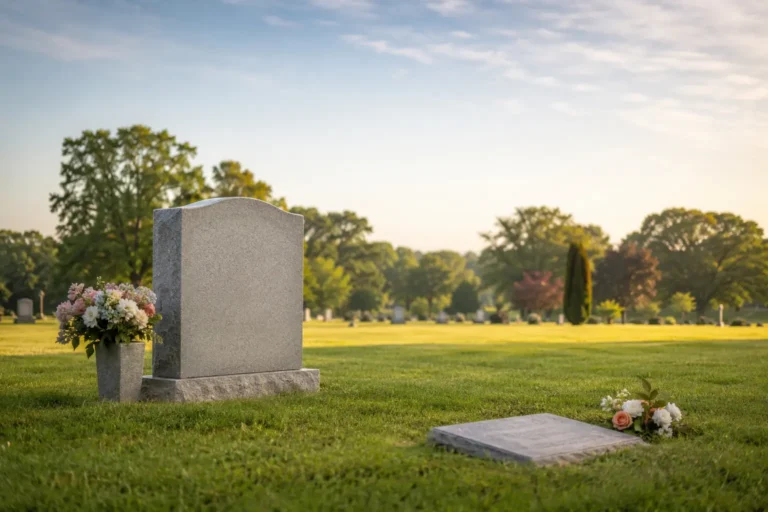
A headstone or grave marker is usually one of the larger costs a family handles after a death, and the price can swing widely depending on the type of marker, the material it’s made from, and the fee the cemetery charges to set it in place. This guide breaks the numbers down into their real parts — the marker itself and the cost to install it — so you can plan with figures that hold up. Because a grave marker is one of the expenses final expense insurance is meant to help cover, knowing the range ahead of time makes it easier to size your coverage correctly.

Headstone Cost Estimator
Estimate the marker plus the cemetery setting fee
Estimates use national cost-of-goods ranges and are for planning only. Actual prices vary by cemetery, region, and provider. The cemetery setting fee applies no matter where you buy the marker.
A small whole life policy can help your family cover costs like these.
What a Headstone Costs to Buy and Set
A grave marker actually comes with two separate price tags, and many families don’t learn this until they’re standing at the cemetery office. The first is the cost of the marker itself. The second is the cost to set it in the ground.
For the marker alone, the realistic range runs from about $200 for a basic flat marker to $5,000 or more for a large upright monument. Most families land somewhere in the middle, paying between $1,000 and $3,000 including installation.
That setting cost is the part people tend to forget. The cemetery charges a separate fee to pour a foundation and place the stone, and this applies on top of whatever you pay for the marker. We cover that fee in full further down the page.
Knowing both numbers up front is the whole point of this guide. A grave marker is one of the costs that final expense insurance is designed to help cover, so seeing the real spread — marker plus setting — helps you plan a budget that won’t come up short.
The rest of this page breaks the marker price down by type and material, then walks through setting fees, engraving, where to buy, and how long the whole process takes.
Headstone Prices by Type and Material
The price of a grave marker comes down to two things working together: its shape and the material it’s made from. We’ll keep these two separate so the logic stays clear.
Shape — what the trade calls the “form factor” — is whether the marker lies flat, slants, stands upright, or covers the grave. Material is whether it’s cut from granite, cast in bronze, or carved from marble. The material discussion below applies to every shape, so we cover it once and don’t repeat it under each type.
Here’s how the common types stack up. These ranges are for the marker and standard engraving only, before the cemetery’s setting fee.
| Marker Type | Typical Price Range |
|---|---|
| Flat / lawn-level marker | $200 – $1,000 |
| Slant marker | $1,000 – $2,500 |
| Single upright | $1,000 – $3,000 |
| Companion (double) upright | $2,000 – $5,000 |
| Bench memorial | $2,500 – $10,000+ |
| Ledger (full grave cover) | $5,000 – $15,000 |
Granite, Bronze, and Marble — What Each Material Costs
Material is one of the two big price drivers, and it’s the one families ask about most. Three materials cover almost the entire market today: granite, bronze, and marble.
Granite is the default, and for good reason. It’s durable, low-maintenance, and accepted at nearly every cemetery in the country. Smaller granite pieces start around $450, and a complete upright granite headstone usually falls between $1,000 and $3,000.
Granite color affects the price more than most people expect. Gray is the most affordable. Black, blue, and red tend to cost more because those colors are often imported from overseas quarries. A basic gray granite upright starts around $1,000, while a premium black granite monument of the same size might cost 40 to 50 percent more.
Bronze is almost never a stone you stand up. Bronze plaques are typically mounted on a granite base and lie flat on the ground. So a “bronze marker” is really a bronze plate set on top of granite, which is why it costs more than granite alone. Bronze grave markers range from $800 to $3,000, while full bronze-on-granite upright monuments can cost $2,000 to $6,000 or more. Some cemeteries require bronze markers, so it’s important to check before deciding.
Marble used to be common but has largely been phased out for new markers. The problem is weathering. Because marble is composed mainly of calcium carbonate, it reacts with the mild acids in rainwater over time, gradually softening inscriptions and dulling the polished surface. You’ll still see it in older cemeteries, and a few specialty makers still offer it. Marble headstones usually cost between $1,500 and $3,500, with highly customized designs sometimes exceeding $5,000.
If budget and longevity both matter, granite is the practical choice. Marble is for families who want its classic look and accept that it may need restoration down the road.
Flat Markers and Lawn-Level Plaques
Flat markers are the entry point. They lie level with the ground, flush against the grass, which is why some people call them grass markers or flush markers.
There are two common versions. A granite flat marker is a single slab with the inscription cut into the top face. A bronze plaque is a cast bronze plate mounted on a granite base — the same bronze-on-granite setup described above.
This is the most affordable category of funeral marker. A standard single flat marker in gray granite starts around $200 to $400 with basic engraving, and even with added personalization most flat markers stay under $800. A single flat grave marker measures roughly 24 by 12 inches.
There’s a practical bonus at the low end. Many families choose flat markers because cemeteries charge lower installation fees, since the markers require less labor to set.
Upright Headstones
The upright is the traditional standing monument — the shape most people picture when they hear the word headstone. It stands above the ground and sits on a base, which gives it more room for names, dates, and design.
An upright headstone, also called an upright monument, stands above the ground and typically includes a base, and that extra stone, labor, and installation complexity is why its cost tends to be higher. A single upright in standard gray granite generally runs $1,000 to $3,000.
The jump to a companion (double) upright comes from size. A companion stone is wider to hold two names, sometimes with a larger base or a double “die” — the upright slab itself. Companion uprights range from $2,000 to $5,000, and custom shapes like hearts, crosses, or sculpted angels push the cost higher because they require specialized cutting and carving.
At the top end, a large custom upright can climb well past those figures, running from $1,500 to $15,000 or more depending on the design.
Slant Markers
The slant marker sits between flat and upright. It’s a solid piece of stone with a sloped front face, set low to the ground but angled up so the inscription is easy to read while standing.
Slant headstones stand at an angle on a granite base and are easier to read than flat or bevel styles. A single slant grave marker usually runs between $1,000 and $2,500, with companion slant markers for two people typically costing $1,300 to $2,500.
Families often choose a slant for a middle-ground reason: more presence than a flat marker, more readable than something at ground level, but less cost and bulk than a full upright. It’s a meaningful upgrade in presence and design flexibility while staying well below the cost of traditional upright headstones.
Ledgers and Bench Memorials
These are the large, premium formats. Both are lower-volume choices, and both carry higher price tags than the standard marker types.
A bench memorial doubles as a place to sit. Bench memorials serve as both a headstone and a seating area for visitors, cost between $3,000 and $10,000, and are a popular choice for family plots or cremation gardens.
A ledger is a full slab that covers all or most of the grave. Because of the sheer amount of stone involved, full-coverage designs typically run $5,000 to $15,000.
Both formats show up most often in family plots, memorial gardens, or settings where the marker is meant to be a centerpiece. They are the kind of burial insurance expense worth pricing carefully before committing, since the range is wide.
Installation and Setting Fees
The price of the marker is only half the story. Before any stone goes in the ground, the cemetery has to pour a foundation and set the marker in place, and that work carries its own fee.
This is the one place on the page where we put numbers on setting fees. Other sections point back here, but the pricing lives in this section.
The foundation is a concrete pad poured below the marker. Your memorial has to sit on a concrete foundation — like the foundation a house is built on — to keep it from sinking into the ground. The setting fee covers pouring that pad, leveling it, and placing the stone on top.
What it costs depends on the cemetery and the size of the marker. Professional installation usually costs $100 to $500, depending on the headstone’s size and the cemetery’s rules. Larger markers cost more to set, and prices can range from about $100 to $1,200 depending on the work required and the size of the monument.
Many cemeteries calculate the fee by the size of the marker’s base rather than charging a flat rate. If the cemetery pours the foundation, it often has a calculated rate based on the square area of the base.
A few cemeteries add smaller charges on top. Some require a permit, which can range from $50 to $300, and may charge an inspection fee, often around $50. When everything is added up, foundation, setting, permit, and shipping fees can add $300 to $1,500 on top of the headstone itself.
Here is the single most important point in this section: the setting fee is charged by the cemetery, and it applies no matter where you buy the marker. Many cemeteries charge it for headstone placement even when you purchase the stone from an outside provider.
That last point matters for budgeting. Buying a marker from a cheaper outside seller does not let you skip the cemetery’s setting fee. We come back to that trade-off in the buying section below.
For families using burial insurance to cover these costs, the lesson is simple: get the setting fee in writing from the cemetery before you buy, so the full installed price is in your budget from the start.
Engraving and Customization Costs
A blank stone becomes a memorial through what’s carved into it. Basic lettering is usually built into the marker price, but anything beyond the standard inscription adds to the total.
This section covers two layers: the standard lettering most people need, and the custom artwork, etchings, and portraits some families add on top.
Lettering and Per-Character Engraving
Standard lettering is carved using a method called sandblasting. The stone is covered with a rubber stencil, then placed in an enclosed room where high-pressured sand carves the exposed areas, creating the permanent design. It’s the most common and most affordable method, and it holds up well outdoors for decades.
A basic inscription is usually included in the marker’s base price. That covers the name, birth date, death date, and a short epitaph. Some providers also include a simple emblem, like a cross or a flower, at no extra charge.
The extra cost comes from longer inscriptions, additional lines, or a second name. Many shops charge by the character beyond what’s included — often about $20 per character for the first 20 characters, and around $10 for each additional character. Others charge a flat rate regardless of length, or add $5 to $10 per character for extra text.
One common situation drives a separate charge: adding a second person’s death date years later. When the second spouse dies, the family must hire a monument company to add the date of death, and the average cost of that on-site engraving is about $350. The reason is location — a cemetery is out in the open, so the engraver must transport special equipment to the site and often work around weather.
| Lettering Item | Typical Cost |
|---|---|
| Basic name, dates, short epitaph | Usually included in marker price |
| Extra characters (per character) | $5 – $20 |
| Adding a death date later (on-site) | About $175 – $400 |
Custom Designs, Etchings, and Portraits
Beyond lettering, families can add artwork, etched scenes, and portraits. These are the personal touches, and they sit at the higher end of the price range.
There are two ways to put a detailed image on a stone. Laser etching uses a computer-guided machine that reproduces designs and photographs by burning the surface of the stone. Hand etching is done by an artist with fine tools and costs more because of the labor.
Laser etching is the more affordable of the two for images. It typically adds $300 to $3,000 on top of standard lettering, depending on the size and detail of the image. It works best on dark polished granite, where the contrast is strongest.
Hand etching is the premium option. By a skilled artisan, it costs $1,500 to $4,000 or more, depending on the artist and the scope of the design.
Two other add-ons come up often. A porcelain memorial portrait or a flower vase costs about $349 each on average, with larger or premium options costing more.
| Customization | Typical Added Cost |
|---|---|
| Religious symbol or simple emblem | $100 – $400 |
| Laser-etched portrait or image | $300 – $3,000 |
| Hand-etched portrait or scene | $1,500 – $4,000+ |
| Porcelain photo portrait or vase | About $350 each |
A practical note for anyone planning a funeral insurance budget: the marker price you see quoted often assumes standard lettering only. If you want a portrait or a custom scene, price those add-ons separately so the final figure doesn’t catch you off guard.
Buying Through the Cemetery vs. an Outside Seller
Once you know what you want, the next question is where to buy it. You have three main paths: the cemetery, a local monument dealer, or an online seller. Each affects both price and how much coordinating you’ll do.
Buying through the cemetery is the simplest path. They know their own rules and handle the approvals and setting in-house. Cemetery purchases offer seamless alignment, but the pricing is often bundled, with engraving, installation, and foundation rolled into one line item.
A local monument dealer sits in the middle. Local dealers can act as your advocate, translating cemetery rules and giving you more design freedom, though you’ll need to clarify whether a quote includes the foundation or just the stone.
Outside and online sellers are usually the cheapest sticker price. Many warehouse and direct-to-consumer sellers cut out the markup that comes with buying through a funeral home or third-party vendor. The savings come from low overhead — online retailers operate without expensive showrooms, and these savings typically range from 40% to 60% compared to local monument dealers.
But “cheaper outside” is not automatic, and here’s why. The cemetery still controls the setting, and that fee applies no matter where you buy — as covered earlier on this page. Some cemeteries work with specific monument companies and may charge a setting fee, sometimes $300 to $800 or more, if you buy from an outside supplier.
There are two more sources of friction. The first is approval and handling rules. Some cemeteries require a specific application or only accept submissions from approved vendors. Buying outside doesn’t remove that requirement. If the cemetery requires an approved installer, buying online simply means you are coordinating across multiple parties, which is where families often run into hidden costs.
The second is the logistics handoff. With an outside purchase, shipping and delivery scheduling fall to you. You may need to coordinate shipping to the cemetery or installer, confirm scheduling and equipment access, and sort out liability for damage.
One legal point worth knowing. The federal rule that stops funeral homes from charging handling fees on outside caskets does not cover headstones. Under the FTC’s Funeral Rule, funeral homes cannot charge a handling fee for a casket purchased elsewhere, but headstones are not covered by this rule. That said, your right to use an outside stone is generally protected. By law, most cemeteries cannot refuse a headstone purchased elsewhere as long as it meets their specifications, though the setting fee is their prerogative.
The bottom line for anyone using funeral insurance to pay for a marker: build a “true total” for each option. Add the stone price, the cemetery’s setting and foundation fees, any approval or handling charges, and shipping. Writing out what you’ll pay the seller, the cemetery, and any third-party installer for each option is the best way to avoid surprise charges. The cheapest stone is not always the cheapest memorial.
The marker rules that shape whether an outside stone will even be accepted are covered in the next section.
How Long It Takes — and Cemetery Marker Rules
Two practical questions come up once the buying decision is made: how long until the marker is in place, and what does the cemetery actually allow. This section answers both, and it’s the page’s home for the full list of cemetery rules.
Production and Setting Timeline
The timeline has two parts: making the marker, and the cemetery setting it. Start to finish usually runs a couple of months or more.
Fabrication begins after you approve a design proof. For a standard headstone, fabrication typically takes four to eight weeks, and longer for custom-carved or specialty orders. A simple flat marker can move faster, while detailed work takes longer.
Adding it all up, most families wait a couple of months. Getting a headstone can take anywhere from 6 weeks to 6 months, depending on material availability, customization, cemetery regulations, and seasonal demand.
There’s also a settling period that has nothing to do with making the stone. Most monument professionals recommend waiting three to six months after a burial before installing a headstone, so the ground can settle fully and the heavy monument doesn’t shift, tilt, or sink over time.
Weather adds delay too, especially up north. Setting an upright monument means pouring a concrete foundation that extends below the frost line, which in northern climates can mean digging three to four feet down. When the ground is frozen, setting often has to wait for a thaw.
Temporary Markers
While you wait, the grave usually isn’t left bare. A temporary marker holds the spot until the permanent stone is set.
Temporary markers are often provided by funeral homes or cemeteries, sometimes at no extra cost, and typically include the name, dates of birth and death, and maybe a short phrase or religious symbol.
The basic versions are simple and inexpensive. Depending on whether it’s a simple plastic plaque from the funeral home or a more personalized piece, the cost can range from almost nothing to a few hundred dollars. If you want something sturdier, custom options made from wood, laser-etched acrylic, or powder-coated metal can run $75 to $300, and some are meant to last through the full production timeline of six months or longer.
Cemetery Restrictions
This is the rule catalog the buying section points to. Before you order anything, the cemetery’s rules decide what’s allowed — and they vary widely from one cemetery to the next.
Written approval is nearly always required. Nearly every commercial cemetery in the U.S. requires written approval before a headstone can be installed, and even if you own the plot outright, the deed almost certainly includes an agreement to follow the cemetery’s rules. Those rules can also change over time, so confirm the current ones.
The most common restriction is flat-only sections. Some cemeteries, often called memorial parks, may only permit flat markers, meaning no traditional upright monument is allowed, though some have separate sections for uprights with size limits. The reason is groundskeeping — mowers can pass directly over flat markers.
Before ordering, families or their provider should confirm three things with the cemetery: the maximum dimensions allowed, the materials accepted (granite, bronze, or both), and any design restrictions such as required symbols or flush-only sections. Some go further and restrict granite color or the type of engraving allowed.
Checking first isn’t optional busywork — it prevents a costly mistake. Confirming what’s permitted before placing your order ensures the memorial will be accepted without complications or extra fees. A beautiful outside-bought stone is worthless if the cemetery won’t accept it.
Frequently Asked Questions
Keep Reading







About the Author
Dvir Mosche is an award-winning independent insurance agent and the founder of Palmetto Mutual, a trusted insurance brokerage specializing in Final Expense Life Insurance. Since entering the industry in 2017, he has been recognized multiple times as a top agent for his dedication to educating and assisting seniors in finding the proper coverage. His mission is to simplify the process, provide honest and personalized guidance, and ensure that every client gets coverage they can depend on for life.


